
Tiangang® MB6251PP20
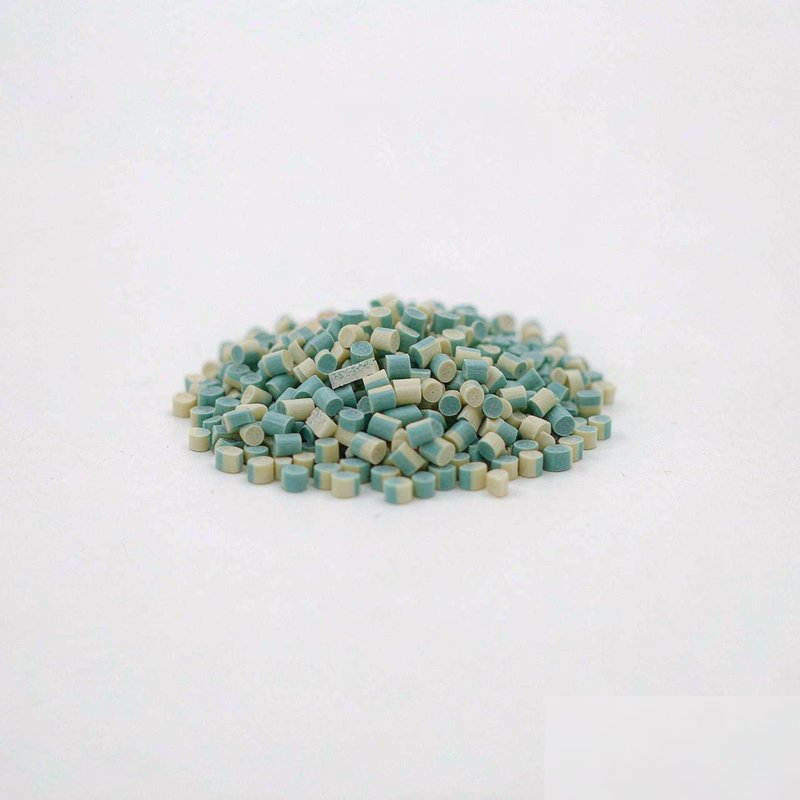
Functional masterbatch · MB6251PP20
light stabilizing masterbatch designed to fulfill the requirement to protect the PP non-woven fabrics used as agricultural films against strong UV sunlight. It is particularly effective when used in thick long-life films
In one sentence: A PP-carrier UV masterbatch with 20% active content, aimed at a different nonwoven process window from 6250PP20.
- Active content: 20% (source: grade description on this page)
- Film and nonwoven let-down ratio: 2 – 5% (source: recommended dosing table on this page)
- Injection moulding and extrusion let-down ratio: 2 – 4% (source: recommended dosing table on this page)
What it is
Tiangang® MB6251PP20 is a functional masterbatch. A masterbatch pre-disperses the active ingredient in a carrier resin and delivers it as pellets. The line simply blends it in, with no powder handling and no local over-concentration from weighing error.
Technical data
| Product Name | Tiangang® MB6251PP20 |
| Description | Tiangang® MB6250PP21 is a light stabilizing masterbatch designed to fulfill the requirement to protect the PP non-woven fabrics used as agricultural films against strong UV sunlight. It is particularly effective when used in thick long-life films, > 100 micron, and expected service life of 2-3 seasons. MB6251PP20 also features improved resistance against acidic chemicals containing sulfur and chloride. |
| Dosage Recommendations | Usually 2% - 5% for greenhouse films (0.4 - 1% concentration of HALS), though exact dosage amount are affected by a number of factors, and should be determined by experiments. |
| Item | Percentage, % | Description | |
| 1. | Active Light Stabilizers | 20 | Light stabilizer blend |
| 3. | Active Antioxidants | 3 | Antioxidant providing protection during extrusion |
| 4. | Carrier | 77 | High melt index PP |
| TOTAL | 100 |
Where it is used, and at what loading
The carrier decides which polymer the masterbatch can go into: PE carrier for PE, PET carrier for PET. The wrong carrier gives poor dispersion, interfacial defects or haze.
| Film and nonwoven | 2 – 5% |
|---|---|
| Moulding and extrusion | 2 – 4% |
| Based on active content | back-calculate from the target loading |
Figures above are typical industry ranges, not guaranteed values. The actual loading depends on wall thickness, design life and the other additives in the system, and should be established by a loading ladder on the real formulation.
On the line
Divide the target loading by the active content to get the let-down ratio: a 20% masterbatch used at a 0.3% target means 1.5% let-down. Dry-blend with the base resin; no extra compounding step is needed. Dry hygroscopic carriers before running. When switching grades on the same line, confirm dispersion and surface appearance on a small batch first.
Choosing between similar grades
Three things decide the choice for MB6251PP20: carrier-to-matrix match, active content, and application fit. Same PP-carrier 20% family as 6250PP20, tuned for a different nonwoven process window; settle it on the line.
Frequently asked questions
Masterbatch or powder — what is the real difference?
Three things: dispersion uniformity, dust, and weighing accuracy. Pre-dispersion puts the active at micron scale so thin parts do not show local defects; the line has no airborne powder; and blending a pellet ratio is far more accurate than weighing a trace of powder.
Why can the carrier not be swapped freely?
Carrier and matrix compatibility decides dispersion. A PE carrier in PP is tolerable; in PET it is not — the processing windows are too far apart and the carrier degrades first. We match the carrier to the matrix and show it in the grade code (MB6250PP20 is a PP carrier with 20% active).
How do I read the active content from the grade code?
From the numbers. MB570-20PET is 20% UV-570 in a PET carrier; MB6250PP20 is a PP carrier with 20% active. Divide the target loading by the active content to get the masterbatch let-down ratio.
The figures and guidance above follow Tiangang's published technical material and common industry practice. For a specific formulation, refer to the batch COA and the technical agreement between the parties.
Related Products
Certifications
- National High-Tech Enterprise
- Vice Chairman Unit, China Plastics Processing Industry Association (CPPIA)
- Vice Chairman Unit, Agricultural Plastics Branch, China Agricultural Plastics Application Technology Society
- Member, Ageing Methods Subcommittee, National Technical Committee on Plastics (SAC/TC15/CS5)
- Member, Society of the Plastics Industry (SPI), USA
Recommended Products
Products
UV Absorbers
400-094-4362
- Tiangang elected Executive Deputy Director Unit of CPPIA Agricultural Film Committee
- Tiangang wins Leading Award at Beijing TV Innovation Institute finals
- Tiangang concludes CHINAPLAS 2023 on a high note
- First industry-academia-research base in Weishanzhuang Town lands at Tiangang
- Tiangang-Tinaco BUCT scholarship award ceremony 2021-2022