
FR-816 High-Molecular-Weight NOR-HALS Halogen-free Flame Retardant
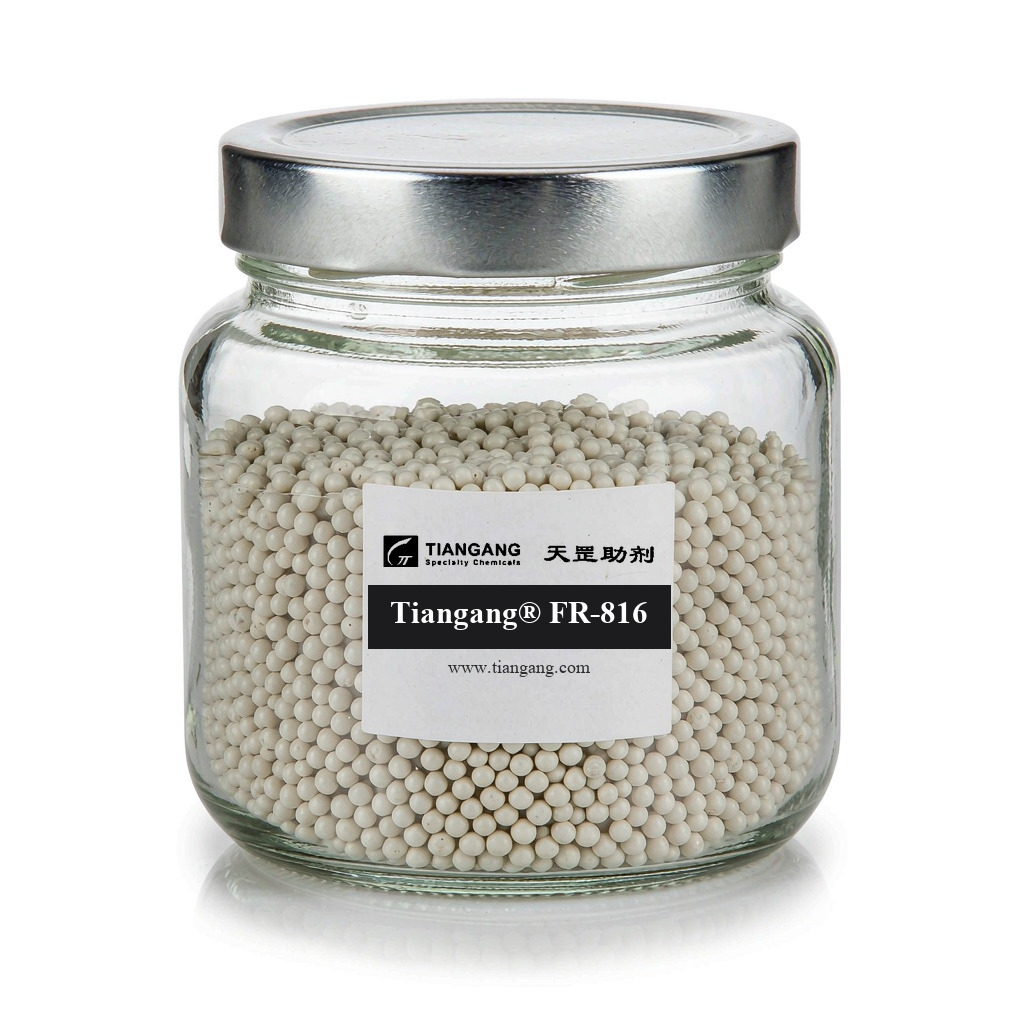
High-Molecular-Weight NOR-HALS Halogen-free Flame Retardant (Solid) · Flame Retardancy / Light Stability / Long-term Thermal Stability in One Molecule
An additive halogen-free flame retardant for thin-section polypropylene and polyethylene articles — occupying the same market position as BASF Flamestab® NOR 116, with a high-molecular-weight NOR-HALS structure that brings a wider processing window and lower extractability.
1. Flame retardancy and weatherability are usually handled as two separate problems
The result seen on the shop floor again and again: the flame rating is met, and the weatherability collapses.
Brominated flame retardants such as deca-bromodiphenyl ethane release HBr and Br⁻ under processing heat or light; phosphorus systems (phosphate esters) likewise generate acidic phosphoric degradation products. These acids protonate the basic nitrogen of N-H type hindered amines (such as HALS 944), the radical-scavenging cycle stops, and the article becomes brittle and discoloured.
The usual remedy is compensation at formulation level — switch to a lower-basicity HALS, add acid scavengers, reorder the addition sequence. These work, but they are compensation: the flame retardant and the light stabilizer remain two independent systems, the acid–base balance has to be tuned repeatedly, and halogenated routes keep coming under export compliance pressure.
FR-816 takes a different route: the flame-retardant function itself stops producing acidic by-products.
2. The NOR route puts flame retardancy and light stabilization in one molecule
NOR (N-alkoxy hindered amine, also referred to as NOR HAS) carries two roles on the same molecule:
- Light stabilization — the alkoxy substituent on the nitrogen lowers the electron-donating capacity of the lone pair, making the structure far less basic than conventional N-H hindered amines (published literature reports pKa around 4 for NOR HAS versus about 9.5 for NH-HALS).
- Flame retardancy — on heating, the N–O bond cleaves preferentially to generate highly reactive radicals that take the substrate out of the flame zone.
- The consequence — the flame-retardant function no longer generates acidic by-products, so the light-stabilization system is no longer consumed from the source. Formulators no longer have to balance acid–base chemistry across two systems.
3. How the flame retardancy works
FR-816 belongs to the class of radical generators. Its action path differs from the condensed-phase charring route, and it is at its most efficient in thin sections:
- Radical generation — the N–O bond cleaves preferentially, producing aminyl, nitroxyl and alkoxy radicals.
- Condensed phase — the substrate retreats from the flame — radicals scission the polypropylene backbone; molecular weight and melt viscosity drop sharply, and the material drips out of the flame zone carrying heat away. This is why fibres, films and tapes respond so well.
- Gas phase — the chain reaction is interrupted — radicals enter the flame and quench H•, OH• and CH₃• chain-branching radicals, terminating gas-phase combustion.
- Synergy — with halogenated systems it promotes earlier HBr release, cutting total flame-retardant loading and removing antimony trioxide; with phosphorus or intumescent systems it improves char and gas-release behaviour.
4. Four structural characteristics of FR-816
Flame retardancy, light stability and long-term thermal stability come from the same molecule. Formulators no longer trade one logic against the other — a capability that is scarce in this industry.
The N-OR structure stays active in acid rain, pesticide residues, halogenated flame-retardant degradation products and acid generated by filled rubber, and can be used alongside ordinary HALS without premature deactivation.
The high-molecular-weight NOR-HALS structure means low volatility and low migration, which suits thin articles in long-term outdoor exposure. Solid granules are convenient to meter and disperse.
FR-816 is melt processable and does not reduce the mechanical properties or appearance of the base polymer; transparent PP articles can stay transparent. The upper processing temperature follows the official FR-816 TDS.
5. Positioning against BASF Flamestab® NOR 116
The left column lists the structural characteristics of FR-816; the right column lists data that can be checked in the benchmark's public documentation. FR-816's own values follow the official Tiangang TDS and COA — please contact our sales representative for them.
| Attribute | Tiangang® FR-816 | Benchmark BASF Flamestab® NOR 116 (public data) |
|---|---|---|
| Chemistry | High-molecular-weight NOR-HALS (N-alkoxy hindered amine) | Monomeric NOR HAS (triazine derivative), CAS 191680-81-6 |
| Physical form | Solid granules | Off-white granules |
| FR / stabilization mechanism | NOR radical generation + low-basicity hindered amine | Same NOR route |
| Interaction with ordinary HALS | No protonative consumption; usable alongside ordinary HALS | Public data: low basicity, no interaction with HALS |
| Volatility and extraction | High molecular weight: low volatility, low migration, low extraction | Melting range 108–123 °C; water solubility <40 ppb; vapour pressure (20 °C) 1×10⁻⁴ Pa |
| Upper processing temperature | Per the official FR-816 TDS | Public data: do not process above 250 °C |
| Reference loading | Determined on the final article | Public data: PO fibres and nonwovens 0.5–1.5%; PO films and tapes 0.5–1.5% |
| Suitable articles | PP / PE fibres, nonwovens, tapes, films and sheets | Public data: polyolefin fibres, nonwovens and films |
| Publicly cited standards | Tested on the final article | Public data: FMVSS 302, DIN 4102 B2, UL 94 VTM, NFPA 701 |
| Registration status | Per our latest product declaration | pinfa record: REACH registered in 2012; no GHS hazard classification |
Source of the benchmark data: BASF Flamestab® NOR 116 technical information (TI/EVF 1033 e, September 2015) and the pinfa substance record. These figures describe the performance envelope and validation conventions of this chemistry; they are not measurements for FR-816.
6. Applications
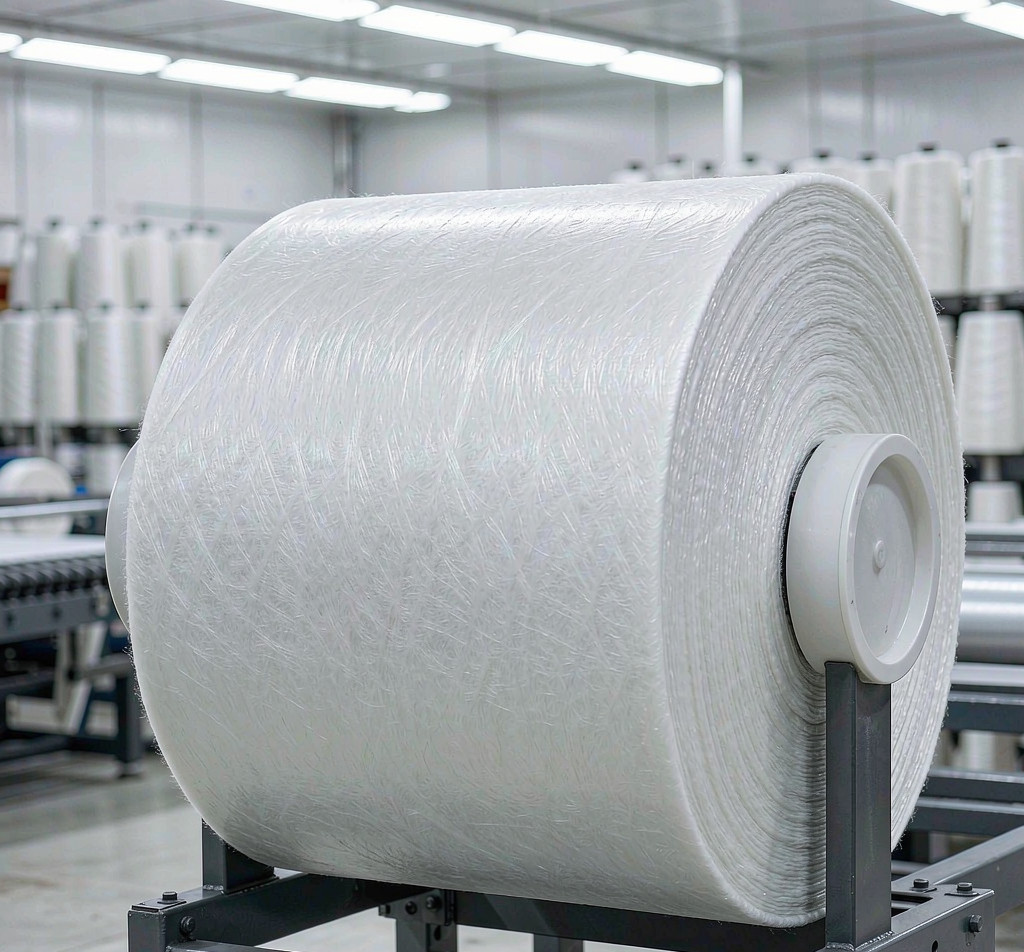
FR-816 is at its best in thin-section polyolefin articles — high surface-to-volume ratio, fast heat dissipation, and a melting-drip mechanism that works in its favour.
- PP / PE fibres, melt-spun and spunbond nonwovens, medical and hygiene nonwovens
- Tapes and raffia, woven fabrics, shade nets and construction textiles
- Transparent PP film, BOPP, films and sheets
- Artificial turf fibres, outdoor seating and sports facilities
- Agricultural nonwovens, horticultural and construction textiles

7. Selection and validation
Loading in the NOR route depends strongly on the article itself. The items below have to be validated on the final construction:
| Validation item | Typical references | Typical FR-816 applications |
|---|---|---|
| Rate of burning / surface spread | MVSS 302 · FMVSS 302 | Automotive interiors, shade nets, tents and awnings |
| Building material reaction to fire | DIN 4102 B2 · GB 8624 | Construction textiles, shade nets, interior and structural materials |
| Textile flame propagation | NFPA 701 | Nonwovens, curtains, furnishing fabrics and bedding |
| Thin-section UL 94 | UL 94 VTM / VTM-2 | Films, tapes and sheets |
Four variables decide the outcome of a test: article thickness, orientation (draw ratio), construction (co-extruded / nonwoven / woven) and processing conditions. When any of them changes, the same loading delivers a different result — so the loading has to be established on the final construction rather than carried over from experience.
For combined systems, FR-816 can be used with Tiangang's polymeric HALS (HS-625, HS-944) and UV absorbers (UV-326, UV-234): NOR handles flame retardancy and weatherability, HALS adds long-term light stability, and the UV absorber protects colour in light-coloured articles. Our technical team can work on the formulation with you.
8. Where the technology does not reach
- Thin sections are the home turf — the NOR route works by melting drip. Published literature notes that NOR-containing injection-moulded formulations typically reach UL 94 V-2 rather than V-0 because burning drips cannot be avoided; thick structural parts need an intumescent or phosphinate system alongside.
- Not suited to no-drip requirements — melting and dripping away from the flame is part of the mechanism, and that inherently conflicts with requirements that burning drips must not occur.
- Check the processing temperature — polypropylene spinning commonly runs at 230–260 °C; whether that fits the product's upper processing limit follows the official TDS.
- Resin scope — designed for polyolefin systems; engineering plastics and other matrices need separate evaluation.
- Page data is not a substitute for testing — the benchmark figures here are compiled from public documentation and do not replace flame-retardancy and weatherability testing on your finished article.
9. Request samples and technical support
Samples / TDS / SDS / flame-retardant formulation support
For the full technical data sheet and safety data sheet of FR-816, and for flame-retardancy and weatherability recommendations specific to your article, please contact our sales representatives. We can support validation testing against your target standard.
Phone: 400-094-4362 | Contact us →
Frequently asked questions
How does FR-816 differ from FR-810A?
FR-810A is a polymeric halogen-free FR system; FR-816 is a high-molecular-weight NOR-HALS type halogen-free FR in solid form, aimed at thin-section products — fibre, nonwoven, tape and film. Start from the product form and section thickness when choosing.
Why does a thin-section product need its own grade?
Thin sections have a large surface-to-volume ratio, so the path for migration and volatilisation is short, and both FR and weatherability must be delivered at low loading. Only grades with high enough molecular weight and low migration tendency make sense there.
How is the processing temperature set?
From measured results on the finished part. The processing window for thin sections is usually narrower than for thick parts, so validate on a small batch on the target line before scaling up.
The figures and guidance above follow Tiangang's published technical material and common industry practice. For a specific formulation, refer to the batch COA and the technical agreement between the parties.
- Tiangang® HMBTAD
- None
Certifications
- National High-Tech Enterprise
- Vice Chairman Unit, China Plastics Processing Industry Association (CPPIA)
- Vice Chairman Unit, Agricultural Plastics Branch, China Agricultural Plastics Application Technology Society
- Member, Ageing Methods Subcommittee, National Technical Committee on Plastics (SAC/TC15/CS5)
- Member, Society of the Plastics Industry (SPI), USA
Recommended Products
Products
UV Absorbers
400-094-4362
- Tiangang elected Executive Deputy Director Unit of CPPIA Agricultural Film Committee
- Tiangang wins Leading Award at Beijing TV Innovation Institute finals
- Tiangang concludes CHINAPLAS 2023 on a high note
- First industry-academia-research base in Weishanzhuang Town lands at Tiangang
- Tiangang-Tinaco BUCT scholarship award ceremony 2021-2022