
Tiangang® T-66 Pesticide-resistant Light Stabilizer Package for Agricultural Film
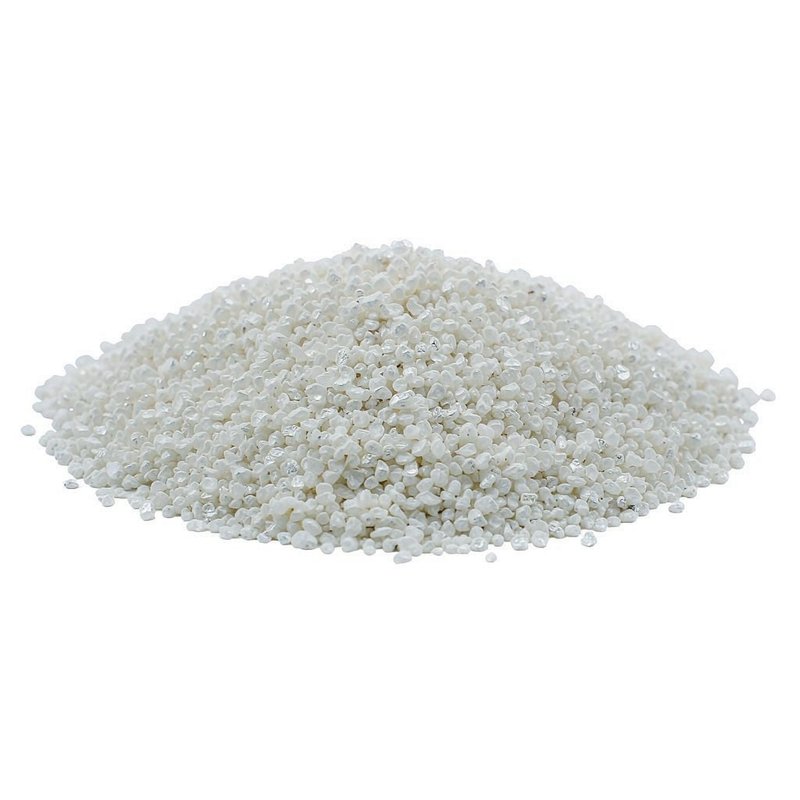
One-pack system · T-66
Pesticide-resistant light stabilizer package specially designed for agricultural films
In one sentence: An agricultural-film additive package for sulfur- and chlorine-containing pesticide environments, where conventional HALS alone decays quickly.
- Agricultural film dosage: 0.3 – 1.5% (source: recommended dosing table on this page)
- Automotive compound dosage: 0.3 – 1.0% (source: recommended dosing table on this page)
- Thin-wall and injection moulding dosage: 0.3 – 0.8% (source: recommended dosing table on this page)
What it is
Tiangang® T-66 Pesticide-resistant Light Stabilizer Package for Agricultural Film is a one-pack system. A one-pack pre-blends light stabilizer, antioxidant and UV absorber for a specific application, so the customer receives one product instead of several to weigh and mix.
Technical data
This grade is supplied as a blend; key figures follow the blend ratio. Refer to the certificate of analysis supplied with each batch.
Where it is used, and at what loading
Each grade maps to one scenario: agricultural film means pesticide and sulfur resistance; automotive compounding means high-temperature processing plus long exterior life; thin-wall parts mean low volatility. Choosing the wrong scenario is choosing the wrong formulation.
| Agricultural film | 0.3 – 1.5% |
|---|---|
| Automotive compounds | 0.3 – 1.0% |
| Thin-wall and moulded parts | 0.3 – 0.8% |
Figures above are typical industry ranges, not guaranteed values. The actual loading depends on wall thickness, design life and the other additives in the system, and should be established by a loading ladder on the real formulation.
On the line
Weigh the pack against the total target loading and dry-blend with the resin; there is no need to dose the individual components. Where the formulation also contains acidic components (some flame retardants, acidic fillers, sulfur-bearing additives), separate the feed order or switch to a low-basicity grade to avoid protonating the HALS. For lines running many grades in small batches, a one-pack mainly removes the chance of a mixing error.
Choosing between similar grades
Three things decide the choice for T-66: carrier-to-matrix match, active content, and application fit. Agricultural-film one-pack for sulfur- and chlorine-bearing pesticide environments, where conventional HALS fade quickly.
How the whole film formulation fits together
One grade rarely tells the whole story. Greenhouse film is usually three-layer co-extrusion: the outer layer carries the UV package, the middle layer holds mechanical strength, the inner layer faces sulfur and chlorine. Mulch film is only 8–15 µm thick, so mechanical integrity and controlled degradation must be met at the same time. Nonwoven and shade net age for different reasons again. Tiangang has set out the ageing mechanisms, the choice between xenon and QUV testing, and a grade-by-grade table for all six covering categories in one document: anti-ageing solutions for agricultural covering materials.
Frequently asked questions
Why buy a one-pack instead of blending in-house?
Blending in-house means solving three problems: ratio, dispersion and batch-to-batch consistency. A one-pack solves them at the factory, leaving the line with a single loading figure. For lines running many grades in small batches, what it removes is the chance of a mixing error.
Can the ratio inside the pack be adjusted?
Yes, given volume. Our blending line has a minimum order for custom ratios, because every blend is re-validated for dispersion and homogeneity.
Why are there several grades for one application?
Differences inside an application are larger than they look. Agricultural film in hot humid south China and in high-UV north China need different balances; bumper and instrument panel differ in wall thickness and surface requirement. Finer grade splits keep the tuning margin in the customer's hands.
The figures and guidance above follow Tiangang's published technical material and common industry practice. For a specific formulation, refer to the batch COA and the technical agreement between the parties.
Certifications
- National High-Tech Enterprise
- Vice Chairman Unit, China Plastics Processing Industry Association (CPPIA)
- Vice Chairman Unit, Agricultural Plastics Branch, China Agricultural Plastics Application Technology Society
- Member, Ageing Methods Subcommittee, National Technical Committee on Plastics (SAC/TC15/CS5)
- Member, Society of the Plastics Industry (SPI), USA
Recommended Products
Products
UV Absorbers
400-094-4362
- Tiangang elected Executive Deputy Director Unit of CPPIA Agricultural Film Committee
- Tiangang wins Leading Award at Beijing TV Innovation Institute finals
- Tiangang concludes CHINAPLAS 2023 on a high note
- First industry-academia-research base in Weishanzhuang Town lands at Tiangang
- Tiangang-Tinaco BUCT scholarship award ceremony 2021-2022
Share the substrate, processing conditions and target service life to save a round of back-and-forth.
Start an inquiry 400-094-4362