
Tiangang® HS-330
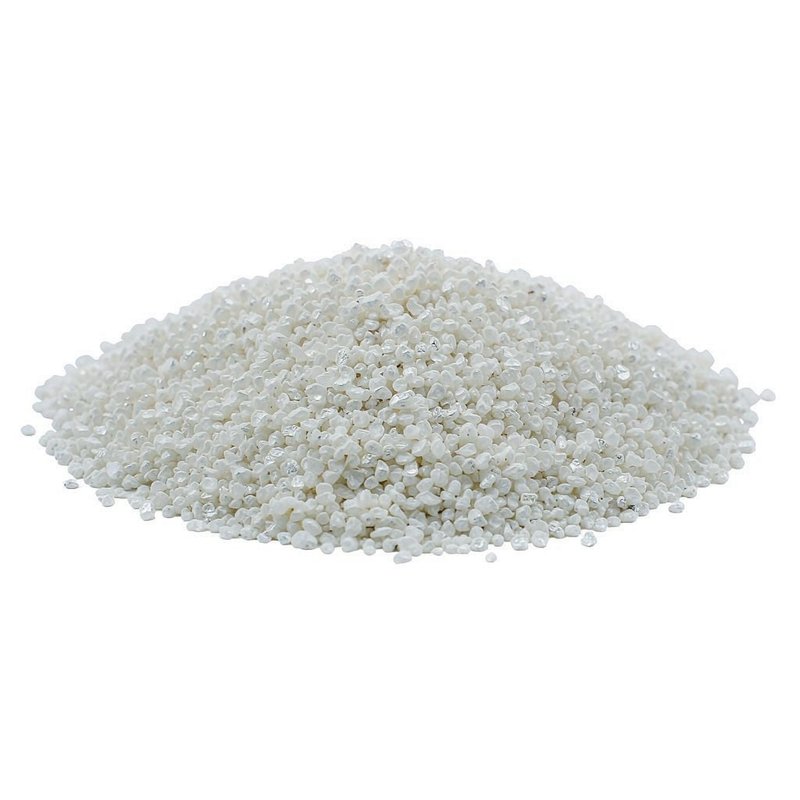
Hindered amine light stabilizer (hals) · HS-330
oligomeric methylated hindered amine light stabilizer (Me-HALS), featuring high molecular weight, and lower interactions with acidic substances. It is particularly suitable for use in thin polyolefin applications. It also serves as long-term heat stabilizer
In one sentence: A polymeric high-molecular-weight hindered amine light stabiliser with a 100 – 135 °C softening range and a 10% weight-loss temperature above 350 °C.
- Molecular weight: >2000 g/mol (source: spec table on this page)
- Softening range: 100 ~ 135 °C (source: spec table on this page)
- Temperature at 10% weight loss: >350 °C (source: spec table on this page)
- Fibre and monofilament dosage: 0.3 – 0.8% (source: recommended dosing table on this page)
What it is
Tiangang® HS-330 is a hindered amine light stabilizer (HALS). HALS trap the radicals formed when a polymer photo-oxidises and regenerate in the process, so the protection window is longer than that of a UV absorber, which is consumed as it works. Product identifiers: molecular weight >2000.
Technical data
| Chemical Name | Hindered amine derivative |
| Description | Tiangang® HS-330 is an oligomeric methylated hindered amine light stabilizer (Me-HALS), featuring high molecular weight, and lower interactions with acidic substances. It is particularly suitable for use in thin polyolefin applications. It also serves as long-term heat stabilizer. |
| Appearance | Molecular weight | Softening range oC | Weight Loss - 10%, oC | |
| Tiangang® HS-330 | Pale yellow powder | > 2000 | 100 ~ 135 | > 350 |
| Tiangang® HS-330 | The use of proper protective equipment is recommended. Excess exposure to the product should be avoided. Wash thoroughly after handling. Store the product in a cool, dry, well-ventilated area away from incompatible materials. |
| Disclaimer | The information supplied is presented in good faith and has been derived from sources believed to be reliable. Since conditions of use are beyond our control, all risks are assumed by the user. No representation is expressed or implied, and nothing herein shall be construed as permission or recommendation to practice a patented invention without license. |
Molecular weight around 2000 — high-MW territory: little volatilisation or migration, which suits long-service outdoor or hot-processing systems, at the cost of slower dispersion.
Where it is used, and at what loading
Suitable for polyolefins (PP, PE), polyurethane, polyamide, polyacetal and polyester. Thin and thick parts call for different grades: thin sections suffer from volatilisation and migration, thick sections from surface bloom.
| Film, tape, nonwoven | 0.1 – 0.5% |
|---|---|
| Injection moulded and thick-wall parts | 0.3 – 1.0% |
| Fibre and monofilament | 0.3 – 0.8% |
Figures above are typical industry ranges, not guaranteed values. The actual loading depends on wall thickness, design life and the other additives in the system, and should be established by a loading ladder on the real formulation.
Choosing between similar grades
Three things decide the choice for HS-330: molecular weight and volatility, basicity, and compatibility with the other components in the system. N-methylated (Me-HALS) structure with less interaction with acidic components than conventional secondary-amine HALS — first choice when flame retardants or acidic fillers are present.
Frequently asked questions
Is this grade meant for thin or thick parts?
It depends on molecular weight and migration tendency. Low-MW grades diffuse quickly and act early but volatilise and migrate over time; high-MW grades (HS-950, HS-362, BW-10LD) suit long-service outdoor parts. Tiangang offers both, so the choice follows wall thickness and design life.
Is it worth combining with a UV absorber?
Yes, they cover different stages. The UV absorber shields incoming UV energy; the HALS scavenges radicals that have already formed. Agricultural film, automotive exterior and PV backsheet usually need both to reach their design life.
What happens if the loading is too high?
Beyond the compatibility limit the additive blooms to the surface, which wastes material and harms appearance and print adhesion. Protection also stops scaling linearly. Our practice is a loading ladder on the actual system, then fix the cost-performance knee.
The figures and guidance above follow Tiangang's published technical material and common industry practice. For a specific formulation, refer to the batch COA and the technical agreement between the parties.
Certifications
- National High-Tech Enterprise
- Vice Chairman Unit, China Plastics Processing Industry Association (CPPIA)
- Vice Chairman Unit, Agricultural Plastics Branch, China Agricultural Plastics Application Technology Society
- Member, Ageing Methods Subcommittee, National Technical Committee on Plastics (SAC/TC15/CS5)
- Member, Society of the Plastics Industry (SPI), USA
Recommended Products
Products
UV Absorbers
400-094-4362
- Tiangang elected Executive Deputy Director Unit of CPPIA Agricultural Film Committee
- Tiangang wins Leading Award at Beijing TV Innovation Institute finals
- Tiangang concludes CHINAPLAS 2023 on a high note
- First industry-academia-research base in Weishanzhuang Town lands at Tiangang
- Tiangang-Tinaco BUCT scholarship award ceremony 2021-2022