
Organization
ORGANIZATION · How Tiangang is organized
R&D, application technology, production and quality on one line
Tiangang puts four things into one system — find the failure, reproduce it in the lab, verify it in the field, deliver it as an engineered product — instead of splitting sales and technology into two camps. This line decides whether Tiangang can bring verifiable data to a customer’s production line.
Four functions, one closed loopFour Functions
Tiangang’s technical organization has four parts — R&D center, application technology center, quality center and production system — matching the four stages of an anti-ageing additive from formulation design to stable delivery. They are not parallel units but an interlocking chain: application technology finds the problem, R&D solves it, production makes the solution repeatable, and quality keeps it from coming back.
R&D center · from mechanism to product
Handles mechanism research in polymer anti-ageing, new product development and technology reserves, with two departments: Synthetic Technology R&D (intermediate routes and synthesis processes for new products) and Analytical Technology R&D (structural characterization, molecular weight distribution, failure mechanism analysis). The center carries the full path from bench scale through pilot to commercial production, with long-term industry-academia-research cooperation with institutions such as the Chinese Academy of Sciences.
Application technology center · the customer-facing front end
This is the clearest organizational difference between Tiangang and purely manufacturing additive companies. The application technology center does not sell; it answers specific customer questions: why did this batch discolor in three months? Which stabilization system should a yellowing greenhouse film use? How do you compensate for HALS failure once a flame retardant is added? The team recommends additive type and loading based on substrate, process and service environment, not just a product catalogue.
Quality center · numbers verifiable batch by batch
Batch testing and retained-sample traceability for raw materials, intermediates and finished products, with a COA delivered with each batch. Tiangang treats batch consistency as a non-negotiable quality floor — additives are a small dosage, but fluctuation in their indicators directly changes how a customer’s product performs outdoors.
Production and management system · stable delivery
Covers marketing, production, procurement, technical R&D, administration and HR, finance and the Gu’an branch plant, supported by domestic sales, international sales, production safety, environmental protection and materials departments. Production runs on DCS automated process control, with digital management from raw material to finished product.
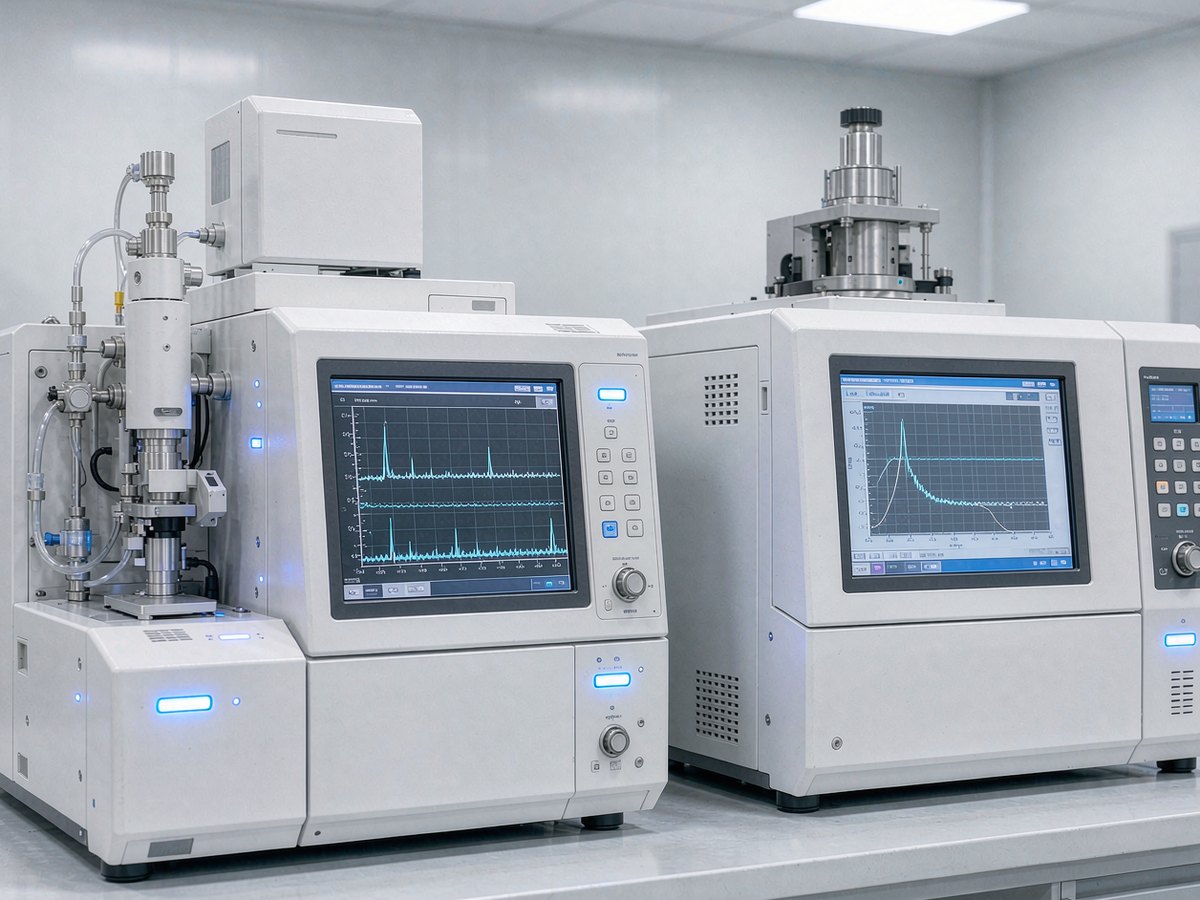
Analytical Technology R&D — quantitative analysis of key indicators
The five questions Tiangang always asks on siteFive Diagnostic Questions
The first group of questions from a Tiangang technical team is always the same five:
Without these five answers, any formulation advice is a guess. This is why Tiangang welcomes customers who come with real operating conditions — only with the conditions clear can Tiangang commit to a grade and loading.
Customers describe symptoms; Tiangang first translates the symptom into a failure modeDiagnosis First
What comes back is usually “it whitened”, “it went brittle”, “it yellowed”, “it failed spec”. But the same symptom can have entirely different chemical causes, and entirely different fixes. Tiangang does not recommend a product before the cause is clear — this step is diagnosis, not selling.
| Symptom described | Possible causes (ruled out one by one) | Tiangang’s diagnostic tools |
|---|---|---|
| Surface deposit, haze, blooming | • Additive–resin compatibility too low • Poor dispersion • Migration and plate-out | Microscopy of deposit morphology FTIR to identify deposit composition Compare samples from different dispersion processes |
| Yellowing, browning | • Photo-oxidation forming quinone chromophores • Catalytic degradation by acidic FR by-products • Acid released by the substrate itself (e.g. acetic acid from EVA) | Colorimeter ΔYI distribution FTIR tracking of carbonyl growth XPS surface analysis Control-group elimination |
| Chalking, gloss loss, brittle cracking | • Conventional photo-oxidative chain scission • Loss of light protection after the FR consumes the HALS • Insufficient antioxidant phase | Xenon-arc accelerated ageing plus tensile retention tracking FR and non-FR versions of the same formulation compared |
| Fast tensile loss, life short of spec | • Additive loss through extraction • Molecular weight already reduced (recycled content) • Gel or crystal defects | Additive residue analysis after media immersion GPC molecular weight distribution Comparison against a virgin-resin baseline |
| Color drift and surface chalking in FR parts | Acid from the FR protonating the HALS (the industry’s hardest problem) | pH measurement FR and HALS mixed alone as an accelerated ageing control |
Tiangang’s diagnostic speed: Tiangang’s diagnostic speed comes from having the equipment. FTIR, XPS, colorimeter, GPC and pH meter are all in our own laboratory, so a customer sample is concluded on arrival with no third-party queue.most failure diagnoses are completed inside Tiangang within one week. Tiangang makes “first establish whether the deposit is additive or substrate degradation product” a standard diagnostic step — if it is substrate degradation, adding more additive will not help.
The five-step cycle of Tiangang technical serviceFive-step Loop
This is how a Tiangang technical team actually works on a customer project:
1 Diagnosis
First reproduce the customer’s failure mode with ageing tests, and establish whether it is photo-oxidation, thermal-oxidative degradation, acid from the flame retardant, extraction and migration, or impurity acid radicals.
2 Selection
Across four dimensions — UV absorber, HALS, antioxidant and flame retardant — choose grades that are compatible with the substrate and do not react with other components of the system.
3 Formulation
Set the ratio of the four additive classes and the order of addition — Tiangang recommends acid scavenger first (hydrotalcite, epoxy-functional polymer), then the flame retardant with assured dispersion, and the light stabilizer last, while monitoring the upper melt temperature limit.
4 Validation
Xenon-arc, QUV and thermal-oxidative ageing run in parallel, with mechanical, optical and color tracking, compared under identical conditions against the customer’s current formulation.
5 Follow-up
Long-term data from the Beijing and Guangzhou exposure sites flows back to refine the formulation model.
Why Tiangang gives comparative data, not absolute numbersWhy Comparative Data
At the validation stage Tiangang provides a like-for-like comparison against the customer’s current formulation, not an absolute number. Weathering performance depends heavily on the customer’s substrate grade, processing conditions and service environment, and an absolute figure divorced from those preconditions means nothing. What Tiangang can commit to is one sentence: how much better Tiangang’s solution is than the current formulation, on the same substrate under the same conditions.
Tiangang also does not use single-value conversions such as “1,000 hours equals 5 outdoor years” in external statements. Xenon-arc testing is an accelerated simulation, good for relative side-by-side comparison but unable to reproduce every real outdoor variable; the same duration ages plastics, coatings and rubber differently; and year-to-year variation in natural exposure can exceed ±30%. Tiangang concludes from two tracks — accelerated testing plus real outdoor measurement. The long-term data from the Beijing and Guangzhou sites is what backs up what Tiangang says.
Beyond the organization: joint venture and overseas companyInternational Reach
Tianji Clariant Chemical Auxiliaries (Cangzhou) Co., Ltd.
A 50/50 joint venture with Clariant Plastics and Coatings (Switzerland), one of the world’s top 50 specialty chemical companies. On stream in 2021 with a 2,000 t/y polymer additive project; environmental approval for a 1,300 t/y light stabilizer expansion granted in 2024.
Tiangang Chemicals Europe B.V.
Based in Brussels, Belgium, handling technical development and service plus marketing. European customers have a local technical contact instead of working across time zones.
Want to see how Tiangang’s technical team would handle your problem?
Tell the team your material grade, processing conditions, part thickness, service years and environmental conditions. We start with a failure diagnosis, then discuss whether a solution is feasible. Laboratory visits and technical exchanges can also be arranged — the diagnosis itself is usually worth more than customers expect.
Contact the Application Technology CenterCertifications
- National High-Tech Enterprise
- Vice Chairman Unit, China Plastics Processing Industry Association (CPPIA)
- Vice Chairman Unit, Agricultural Plastics Branch, China Agricultural Plastics Application Technology Society
- Member, Ageing Methods Subcommittee, National Technical Committee on Plastics (SAC/TC15/CS5)
- Member, Society of the Plastics Industry (SPI), USA
Recommended Products
Products
UV Absorbers
400-094-4362
- Tiangang elected Executive Deputy Director Unit of CPPIA Agricultural Film Committee
- Tiangang wins Leading Award at Beijing TV Innovation Institute finals
- Tiangang concludes CHINAPLAS 2023 on a high note
- First industry-academia-research base in Weishanzhuang Town lands at Tiangang
- Tiangang-Tinaco BUCT scholarship award ceremony 2021-2022