Automotive Polymer Additives: Weathering, VOC and Flame-Retardancy Solutions
The automobile is one of the most demanding applications of polymer materials in the world. A single vehicle contains over 30,000components, among which polypropylene (PP), TPO, PC, PVC, TPU, polyester and rubber are extensively used; and a vehicle must retain its appearance and performance across -40 degC to +85 degC temperature swings, several hours of direct sunlight per day, rain, snow, salt spray, and a service life of over ten years. This means the stabilizer for automotive use is not 'one additive,' but a coordinated system designed by location, by resin, and by failure mode.
Since 1991, Tiangang has focused on polymer additives and built a complete portfolio across four major categories - light stabilizers, UV absorbers, antioxidants and flame retardants - and offers the following distinctive products for the automotive industry: T-78 light-stabilizer pack for automotive modification,FR-810A polymeric halogen-free flame retardant,XT-8 high-molecular-weight NOR light stabilizer among other specialty products. This article is organized into five topics addressing the material issues of greatest concern to the automotive industry, the applicable standards, and Tiangang's corresponding solutions.
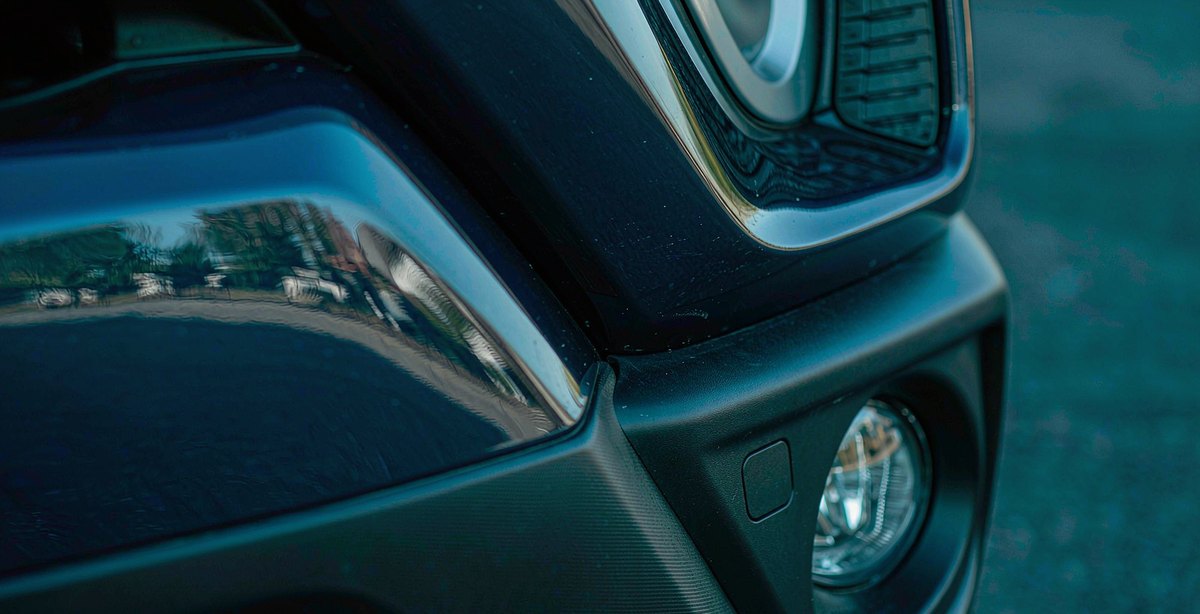
This topic is divided into five themes
For easy reference on demand, the five sub-topics below correspond to the five core problem categories of automotive materials. Click a card to enter.
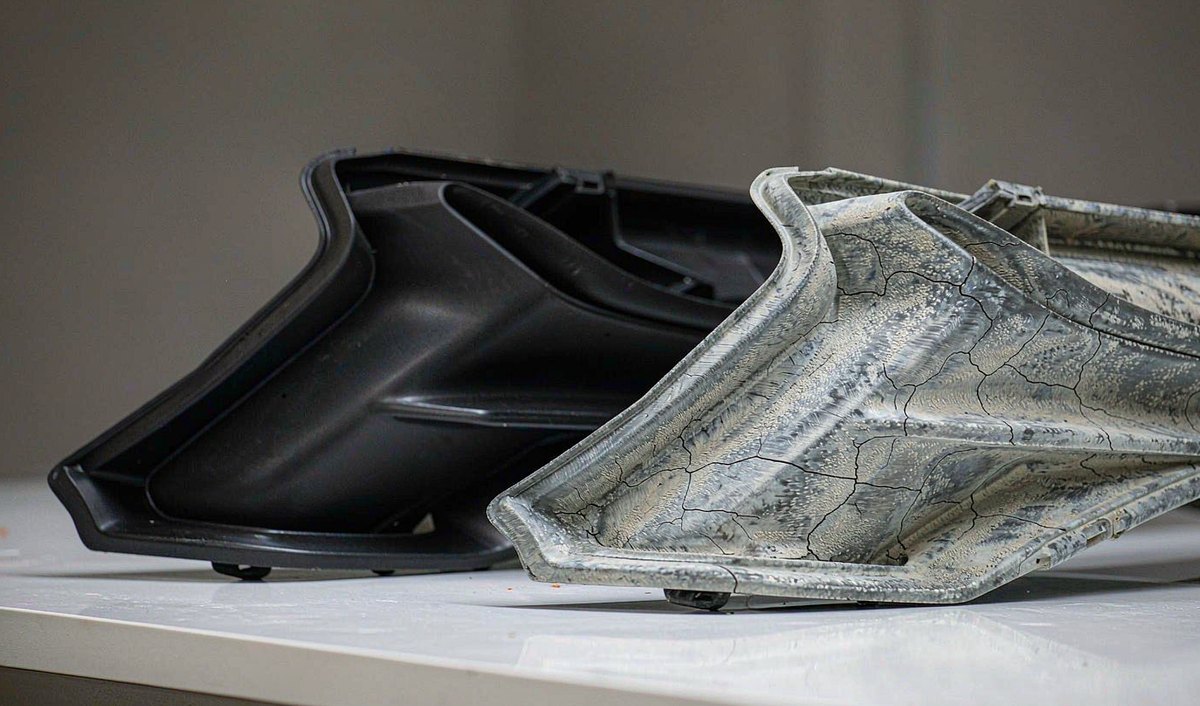
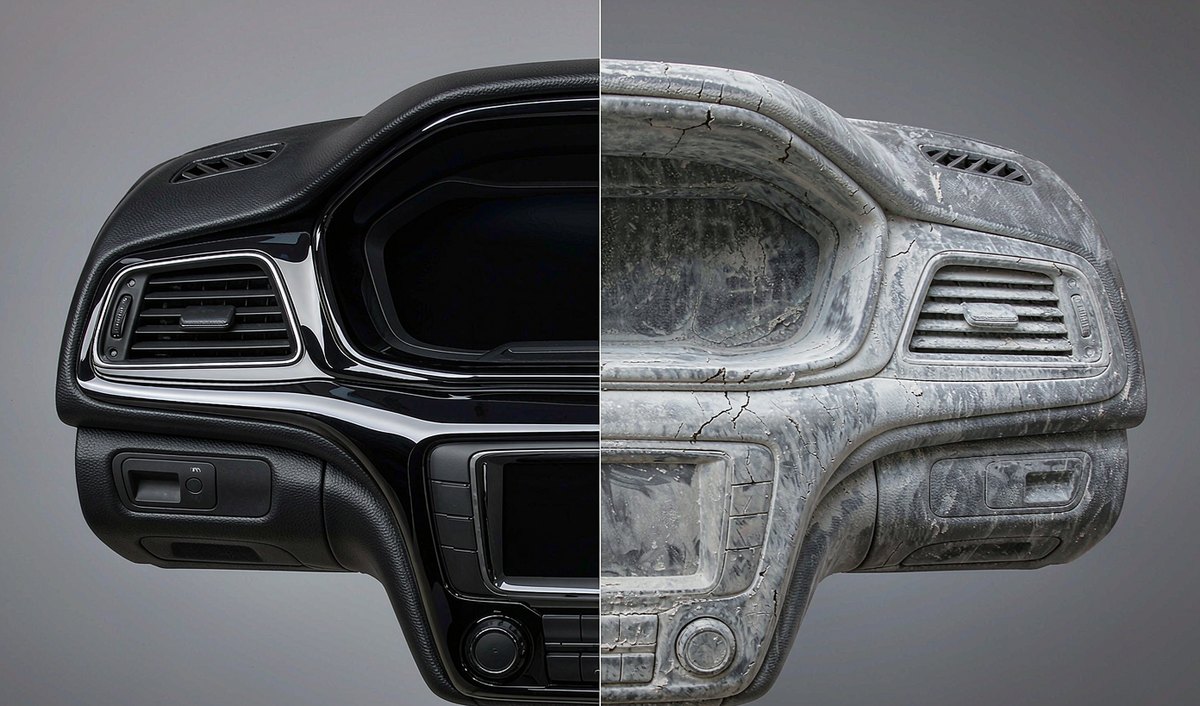
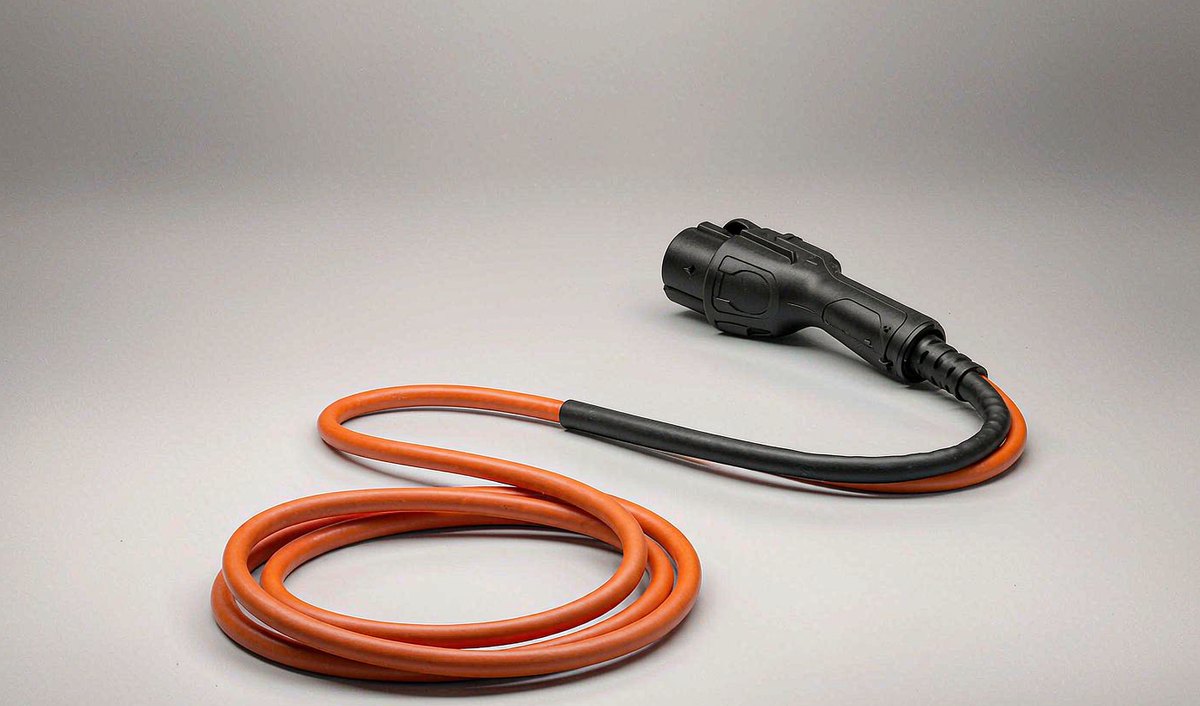
I. The real mechanism of automotive material aging
In the lab, the strength loss of PP sheet under sunlight is visible to the eye; but in an OEM's failure analysis, the problem is often more complex -it is never a single factor, but the superposition of multiple factors. Understanding this is the prerequisite for selecting the right additive system.
1.1 Exterior parts: why PP is particularly difficult to handle
Every repeat unit on the PP main chain carries atertiary C-H bond, which is highly prone to hydrogen abstraction under UV or thermal excitation, initiating an autocatalytic 'hydroperoxide -> radical' chain reaction. The insidious part of this mechanism is that it isautocatalytic: once the chain reaction starts, the material can jump from 'slight discoloration' to 'chalking, loss of gloss + sharp drop in impact strength' in a very short time.
Measured data illustrate the point: under strong sunlight,unstabilized PP can lose 70% of its strength within days; whereas a similar formulation treated with a complete stabilization system can have its outdoor life extended to several years. The difference is not in 'what was added,' but in 'whether the system is correctly built.'
1.2 Interior parts: beyond weather resistance, there are VOC, odor and fogging
The interior is another battleground. The dashboard temperature under summer sun exposure can reach 80-100 degC80–100℃, while semi-volatile substances inside the cabin (plasticizers in soft PVC, white oil in TPE, residual DMF in PU synthetic leather) volatilize at high temperature and re-condense on the windshield, formingfogging deposits- which is both a safety risk and a core focus of OEM VOC regulations.
1.3 Electrical and new energy: the superimposed requirements of halogen-free flame retardancy and long life
The operating voltage of high-voltage wiring harnesses has reached AC 1000V / DC 1500VAC 1000V / DC 1500V, with a long-term operating temperature of 125-150 degC; the battery-pack enclosure must simultaneously satisfyhalogen-free flame retardancy + long-term thermal stability + outdoor weather resistance. When these three are combined, the common simple 'antioxidant + flame retardant' combination hinders itself - especiallybecause acidic substances released by halogen-containing or phosphorus-containing flame-retardant systems neutralize conventional basic HALS, causing premature deactivation. This is precisely why XT-8 (N-OR structure, does not react with acids) and FR-810A (polymeric NOR halogen-free flame retardant) exist.
II. The standard thresholds of the automotive industry: which gates must materials pass first
Formula review for automotive materials is, in essence, a point-by-point response to the following sets of standards. The table below lists the most frequently cited and most illustrative parts.
| System | Representative standards | Core requirements |
|---|---|---|
| Burning characteristics | GB 8410-2006 (Chinese passenger-car interior) GB 38262-2019 (bus interior) FMVSS 302 (USA) UN/ECE R118 (buses with >=8 seats) | Horizontal burning rate <=100 mm/min≤100 mm/min (<=102 mm/min for FMVSS 302); ECE R118 additionally includes dripping, vertical burning and cable flame-retardancy requirements |
| VOC and odor | VDA 278 / VDA 277 / VDA 270 GB/T 27630-2011 | German OEMs generally require VOC <=50 ug/g, FOG <=0.5 mgVOC ≤50 μg/g, FOG ≤0.5 mg; VDA 270 odor grade <=3.0 (F3); the national standard sets limits on 8 in-cabin VOC items |
| Fogging | DIN 75201-B / ISO 6452 | Condensate is generally required to be <=2 mg≤2 mg (some OEMs require <=1.0 mg) |
| Weathering aging | SAE J2412 (interior xenon) SAE J2527 (exterior xenon) ISO 4892-2 / GB/T 16422.2 | Interior: enhanced UV filtration, black-panel temperature about 89 degC,no spray; Exterior: with front/back spray, black-panel temperature about 70 degC |
| Post-aging judgment | Each OEM's enterprise standard | Color difference Delta E <=2 (some <=3); 50% elongation-at-break retention >=50%; gloss retention >=80%; impact-strength retention >=70% (exterior, 5 years) |
| New-energy specific | GB 38031-2025 (mandatory from 2026-7-1) | Thermal-propagation requirement upgraded to'no fire, no explosion within the 2-hour observation period'; newly added bottom impact (30 mm steel ball / 150J x 3 times) and external short circuit after 300 fast-charge cycles |
III. Tiangang's capability composition for the automotive industry
Since its founding in 1991, Tiangang has focused on polymer additives for over thirty years, forminga complete matrix with all four categories covered and in-house intermediate supply capability, and has built three major production bases in Daxing (Beijing), Gu'an (Hebei) and Cangzhou (Hebei), with a combined annual capacity of about 30,000 tonnes, and established Tiangang Chemicals Europe B.V. (Brussels, Belgium) in Europe. The significance of this structure for automotive customers is:from single-product procurement to turnkey solution delivery, without having to piece together formulations across multiple suppliers.
3.1 How the four major categories jointly address automotive aging
| Category | Main products | Role in automotive |
|---|---|---|
| Hindered-amine light stabilizer (HALS) (HALS) | HS-944 / HS-950(polymeric) HS-770 / HS-622(low molecular weight) XT-8 / HS-112(NOR type) HS-625 / HS-200 / HS-300 / HS-9611 | Main defense line: captures radicals generated by photo-oxidative aging and regenerates itself, slowing the chain reaction. Polymeric type has low migration and is extraction-resistant, suitable for thin-wall parts and interiors; NOR type is low-basicity, does not react with acids, suitable for systems containing flame retardants or acidic components |
| UV absorber (UVA) (UVA) | UV-326 / UV-328 / UV-327 / UV-329 UV-234 / UV-360(hydroxyphenyl triazine) UV-531(benzophenone) | Front-line interception: preferentially absorbs 290-400 nm UV and converts it to heat, reducing the initial light energy entering the resin. UV-234/UV-360 are high-temperature resistant, suitable for PC lenses and high-processing-temperature engineering plastics |
| Antioxidant | AO-1010 / AO-1076(hindered-phenol primary antioxidant) AO-168(phosphite) AO-B215 / AO-B225(blended) AO-DLTDP / AO-DSTDP (thioester secondary antioxidant) | Thermal-oxidative defense line: protects the processing stage (preventing melt-index drop, discoloration) and long-term use. The blended type (B215/B225) delivers both primary and secondary antioxidant in one addition, reducing part numbers |
| Flame retardant | FR-810A(polymeric halogen-free NOR) | All-in-one: flame retardancy + light stabilization + long-term thermal stability in one, with low volatilization, low migration and low extraction, suitable for parts such as battery-pack enclosures and harness sheaths that require both flame retardancy and weather resistance |
3.2 Four distinctive products
| Product | Positioning | Differentiation highlights |
|---|---|---|
| T-78 Light-stabilizer pack for automotive modification | Automotive-specific blended system | Light stabilization and antioxidant synergy, phased interception of aging, dual protection in processing and use, and more convenient pre-blending of formulations. Ready to use out of the bag, reducing customers' proportion errors in self-blending and incoming-inspection items |
| FR-810A Polymeric halogen-free flame retardant | Dual function of flame retardancy + weather resistance | Based on hindered-amine (HALS) chemistry,polymeric NOR, with low addition (0.2-1.2%) achieving V1-class flame retardancy; the high-molecular-weight structure brings low volatilization, low migration and low extraction; compliant with REACH / TSCA / FDA |
| XT-8 High-molecular-weight NOR light stabilizer | Acid resistance / pesticide resistance | N-OR structure does not react with acidic substances, sulfur resistance 3000-7000 ppm, chlorine resistance <=850 ppm; 38-month real-world shed-aging evidence with mechanical-property retention above 50%; a China-original chemical structure with a CAS number |
| HS-112 Low-molecular-weight liquid NOR | Coatings and liquid addition | N-OR structure resists acid and pesticides, low basicity avoids reaction with acidic components;liquid form is easy to add and disperse, suitable for automotive and industrial coatings (recommended 0.5-2%), and also for special processes requiring liquid feeding |
IV. What Tiangang can provide
- Location-based overall formulation recommendations- not a single-additive recommendation, but a complete combination and dosage range of light stabilizer + antioxidant + UV absorber (with flame retardant when necessary) for specific parts (bumper / dashboard / wiring harness / battery-pack enclosure...).
- Aging tests and formulation-screening support- test assistance for customer formulations on xenon aging (SAE J2412 / J2527 / ISO 4892-2), thermal-oxidative aging, color difference, fogging, etc., helping lock in the system at the prototyping stage.
- In-house intermediates and supply stability- key HALS intermediates (TAA,TMP,TAD etc.) are self-produced, favoring batch consistency and controllable lead times, which is critical in automotive supply chains requiring 4M change management.
- Solutions in functional masterbatch form- such as MB0607-1 light-stabilization functional masterbatches, MB6250PP20 / MB6251PP20 anti-UV functional masterbatches, suitable for downstream processing scenarios where direct powder addition is inconvenient.
- European service window- Tiangang Chemicals Europe B.V. (Brussels, Belgium), providing local technical liaison for European OEMs and tier-1 suppliers.
V. How to get started
We suggest providing the following information at first contact, so we can give more targeted recommendations:1. Part name and location (exterior / interior / electrical / structural); 2. Resin type and grade; 3. Currently observed failure phenomena (discoloration, chalking, gloss loss, embrittlement, blooming, fogging...); 4. Standards or OEM specs to pass; 5. Additives and dosages already used in the existing formulation.
If you are not sure which product to start with, you can also first look at 5. Quick-selection table and product matrix, look up the recommended system by location; or contact our technical team directly.
Certifications
- National High-Tech Enterprise
- Vice Chairman Unit, China Plastics Processing Industry Association (CPPIA)
- Vice Chairman Unit, Agricultural Plastics Branch, China Agricultural Plastics Application Technology Society
- Member, Ageing Methods Subcommittee, National Technical Committee on Plastics (SAC/TC15/CS5)
- Member, Society of the Plastics Industry (SPI), USA
Recommended Products
Products
UV Absorbers

- Tiangang elected Executive Deputy Director Unit of CPPIA Agricultural Film Committee
- Tiangang wins Leading Award at Beijing TV Innovation Institute finals
- Tiangang concludes CHINAPLAS 2023 on a high note
- First industry-academia-research base in Weishanzhuang Town lands at Tiangang
- Tiangang-Tinaco BUCT scholarship award ceremony 2021-2022