Mulch Film Weatherability: Survive a Season Yet Be Recoverable
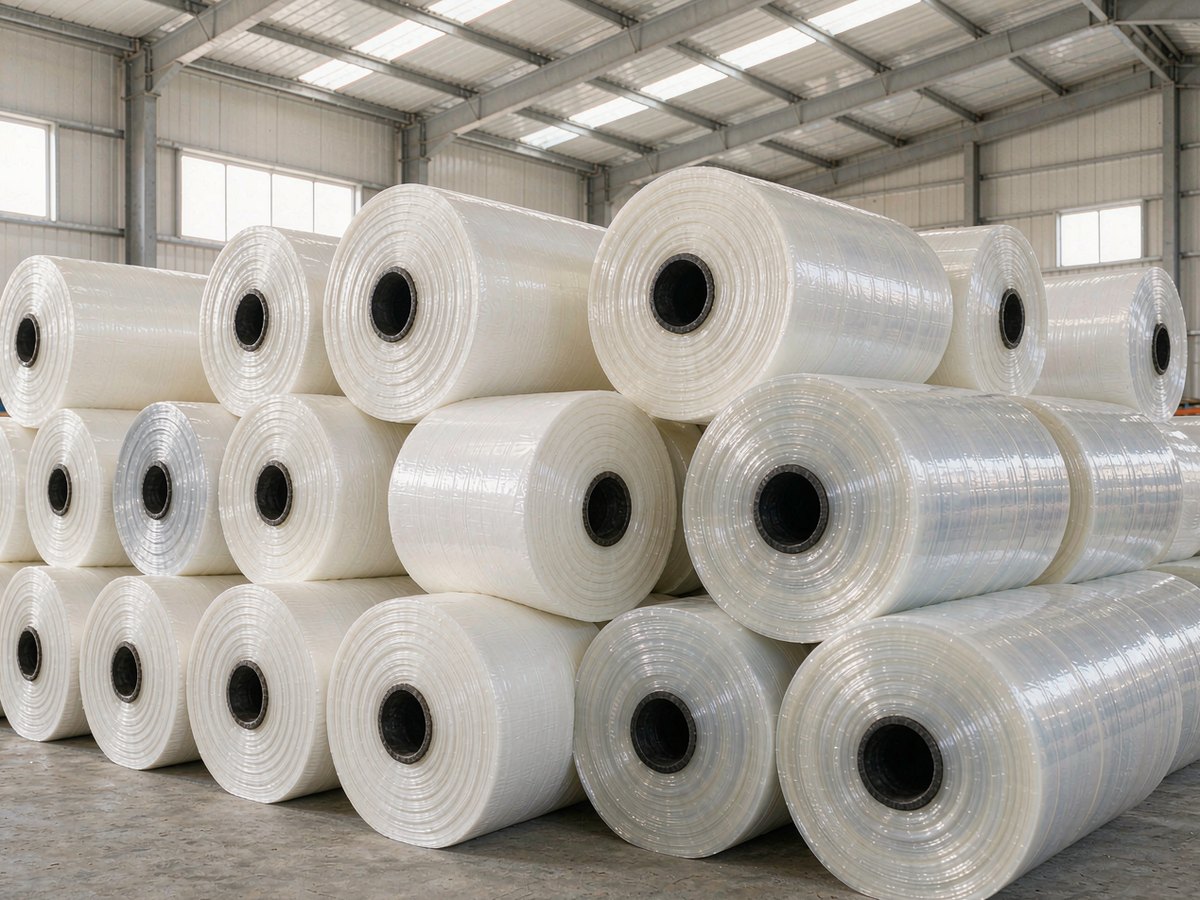
Mulch Film: Survive a Season, Yet Be Recoverable
8–15 µm thin-product mechanical paradox · mechanized recovery · recycled-material quality · degradable routes
Mulch film and greenhouse film are two completely opposite technical propositions. The greenhouse film wants "stability, the longer it stays the better"; the mulch film wants "hold up through the laying and the crop, and still be rollable as a whole when the crop is harvested." Moving the greenhouse-film formulation mindset directly onto mulch often results in film that lays down but cannot be recovered.
I. The core paradox of mulch: three goals conflict with each other
| Goal | Technical handle | What it means for formulation |
|---|---|---|
| A. Field weatherability — hold a season | After laying, the film endures sowing drought, mechanical cultivation, fertilization and irrigation; the surface is continuously abraded by soil and wind-loaded | Antioxidant base + HALS / NOR for UV (more of this direction does no harm) |
| B. Recyclability — recoverable whole | After harvest, residual film must be mechanically recovered; impurity rate and sheet-integrity rate directly determine recovery economics | Over-aging → film embrittles and shatters → fragments remain in soil, and both recovery rate and recycled quality drop. Control degradation degree: both antioxidant and avoiding excessive cross-linking or chain scission; low basicity and low migration are key |
| C. Cost | Mulch is a thin product, 8–15 µm; every 0.1% added is spread over a very thin unit area | Over-dosing directly loses price competitiveness and cannot be passed downstream. Choose high-efficiency low-dosage grades; use masterbatch pre-dispersion to lower the effective-dosing threshold |
Industry's real constraint: average national farmland mulch-film residue intensity is about 3.45 kg/mu, about 5.16 kg/mu in Northwest China, and up to 13.64 kg/mu in Xinjiang; national average mulch recovery rate is below 70%, recovered mulch impurity rate is as high as 70–90%, and cleaning-and-pelletizing cost already exceeds 5,500 yuan/ton, giving low cost-performance versus ordinary PE pellets. The policy direction is to raise the minimum thickness (8 µm → 10 µm → push toward 15 µm and above high-strength recyclable film). This means: the thicker the mulch, the more it must resist aging—a thick film that can be rolled up whole must have sufficient toughness. This is a fundamental turn from the pre-2015 logic of "thinner and cheaper is better."
II. What actually tortures mulch in the field
| Factor | Effect on formulation design |
|---|---|
| Solar radiation + temperature cycling | Oxidative chain scission and embrittlement; oxidation increases polarity, promoting adhesion to soil and organics → mechanical retention drops → fragmentation; meanwhile surface contamination worsens → recovery impurity rate rises |
| Dry-wet cycling | Induces environmental stress cracking; promotes additive leaching. Requires additive extraction resistance; if the additive is leached by water, anti-aging capability is zeroed prematurely |
| Mechanical stress | Tension during laying and recovery, wind flapping, soil and tool abrasion cause notches and fatigue cracks. The impact at the moment of recovery often decides whether the film is "rolled up whole" or "shattered"—the last kick of toughness |
| Soil contact | Soil abrasion + metal-ion/mineral catalyzed oxidation; ash-content rise limits mechanical recovery. The growth rate of the oxidation layer on long-term mulched surfaces is the key variable determining recyclability |
| Agrochemicals | Direct contact with fertilizers and pesticides consumes stabilizers and produces odor; residues bring regulatory and exposure risk. Low-basicity, low-migration systems have the greatest advantage here; acid soil (southern red soil, northern saline-alkali) especially needs NOR |
Recovered mulch's high impurity rate and cleaning-pelletizing cost exceeding 5,500 yuan/ton is the hardest link in the whole chain—and much of that cost is already determined at the formulation stage.
III. Three technical routes for mulch, and what Tiangang offers for each
Route A: high-strength recyclable (current policy main push)
15 µm and above, goal is "no break in a season, whole-sheet recovery at harvest." The key is not "more weatherability" but "resist aging yet not embrittle"—retain toughness and sheet integrity so recovery machinery can roll it smoothly. Requirements for the additive: low-dosage high-efficiency, low basicity (avoid protonation in soil acid), no migration into soil (migration means loss and possible detectable residue).
Route B: short-cycle thin type (traditional 8–10 µm)
Cost first, mostly black or silver-black film; carbon black itself provides strong UV screening. Little additive headroom; the focus is to supplement the bands carbon black cannot cover at the lowest dosage, and ensure no brittle breakage during high-speed laying.
Route C: controlled degradation (fully biodegradable film)
Complies with GB/T 35795. Note the industry reality: "biodegradable" does not equal rapid complete degradation in real fields. Low field temperature, drought and insufficient soil contact significantly limit microbial activity; studies show about 30% of PLA mulch may convert to microplastics within two years, and the fully mineralized fraction remains limited; EN 17033 certification requires ≥90% mineralization under controlled culture in two years. Cost is about 3× ordinary film, farmer acceptance is low, and some products' degradation cycle is out of sync with crop growth, instead worsening microplastic pollution. Therefore this route is currently more suitable for specific crops and demonstration scenarios, not a general solution.
Tiangang solution & products
One sentence for mulch customers
Do not ask "which additive is most weatherable"—on mulch that is the wrong question.
Ask instead: will my film not brittle-break at high-speed laying? On the day the crop is harvested, can it still be rolled up whole? The answers to these two questions are often decided by the same thing: the match between the antioxidant system and the light-stabilizer system, not the dosing of a single product.
Hand the formulation to the Tiangang Technology Center; we will first run a round of xenon-lamp plus soil-simulation comparison, rather than just giving a dosing number.
Certifications
- National High-Tech Enterprise
- Vice Chairman Unit, China Plastics Processing Industry Association (CPPIA)
- Vice Chairman Unit, Agricultural Plastics Branch, China Agricultural Plastics Application Technology Society
- Member, Ageing Methods Subcommittee, National Technical Committee on Plastics (SAC/TC15/CS5)
- Member, Society of the Plastics Industry (SPI), USA
Recommended Products
Products
UV Absorbers

- Tiangang elected Executive Deputy Director Unit of CPPIA Agricultural Film Committee
- Tiangang wins Leading Award at Beijing TV Innovation Institute finals
- Tiangang concludes CHINAPLAS 2023 on a high note
- First industry-academia-research base in Weishanzhuang Town lands at Tiangang
- Tiangang-Tinaco BUCT scholarship award ceremony 2021-2022