Agricultural Nonwoven Weatherability: Extractive Loss of Additives in Ultrafine Fibers and Extraction-Resistant Masterbatch Solution
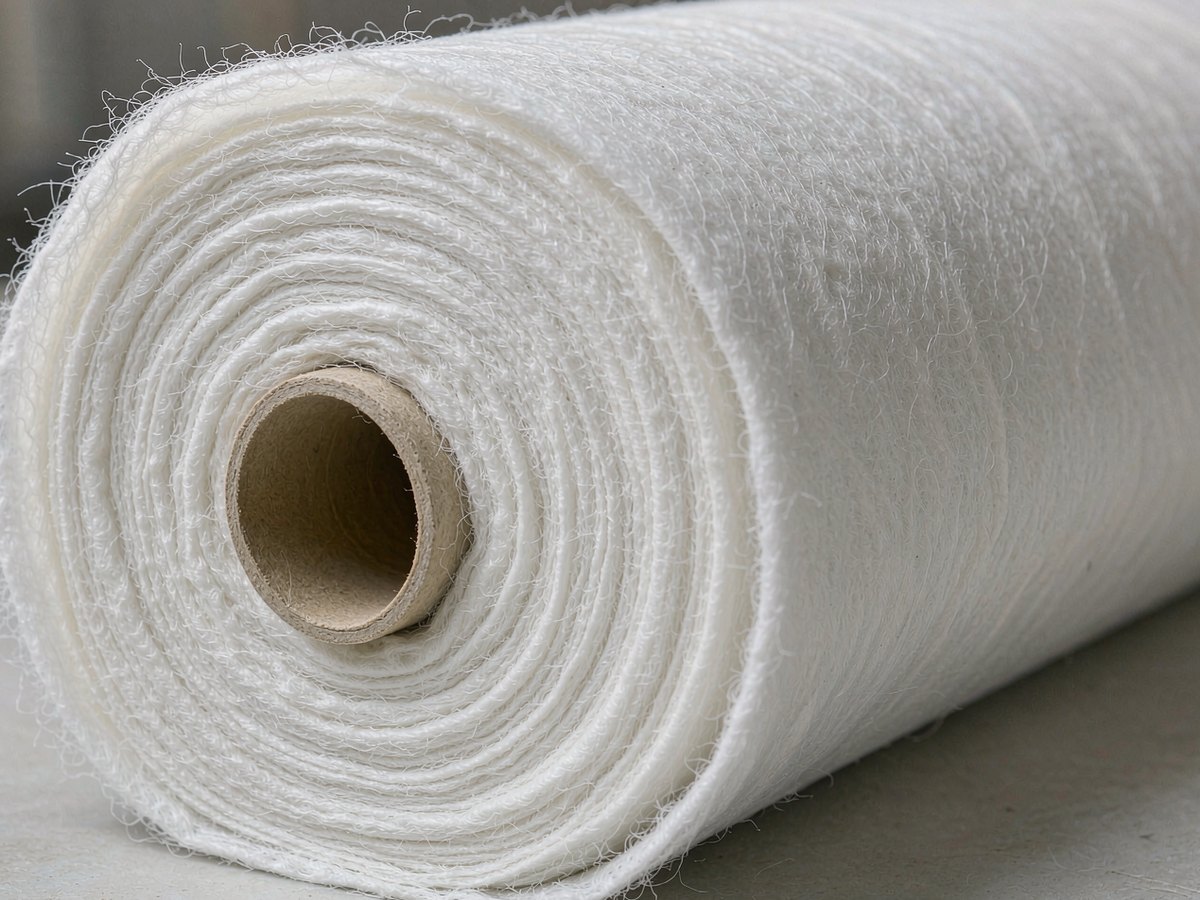
Agricultural Nonwoven Weatherability: Extractive Loss of Additives in Ultrafine Fibers
Spunbond / meltblown PP · white fabric without carbon black · extraction-resistant masterbatch · basis weight and strength retention
The anti-aging difficulty of nonwovens is a completely different problem from films. A film is "bulk-phase aging"—the additive is evenly distributed in the film and slowly consumed. A nonwoven is "surface aging": after PP is spun into micron-scale fibers, its specific surface area is orders of magnitude larger than that of a film of the same volume, and the additive is exposed at the outermost layer and is the first to be washed away by rain.
I. Why nonwovens cannot "retain" their additives
| Dimension | Film (greenhouse / mulch) | Nonwoven (PP spunbond) |
|---|---|---|
| Form | Continuous dense film body | Porous network of 1–3 denier microfibers |
| Additive location | Mainly in the bulk phase | Mainly on the fiber surface—exposed at the most easily washed and extracted position |
| Rain washing | Whole film surface is rained on; additive migrates out slowly | Pores between fibers lead straight to the surface; rain continuously and directionally washes; extraction rate an order of magnitude higher |
| Failure mode | Overall embrittlement and cracking | First local powdering, graying and darkening, then progressive embrittlement and breakage |
| Additive requirement | Conventional weatherability + low basicity | Additional requirement for extraction resistance / wash-out resistance / high molecular weight and low migration |
| Typical dosing logic | Dosed by film thickness and service life | Dosed by basis weight and use scenario; the finer the fiber, the higher the dosage |
International peers' public practice for agricultural PP nonwovens is: high-molecular-weight, high-thermal-stability hindered amines must be used, because the fine filaments of nonwovens impose stricter molecular-weight requirements on the additive. This also explains why Tiangang developed a dedicated masterbatch specifically for agricultural nonwovens.
II. The dilemma of white fabric: without carbon black, it must rely on HALS alone
Shade nets and weed-control fabrics can use carbon black as a physical screen (2–3% carbon black absorbs almost all UV, giving a 3–5 year life). But white nonwoven must transmit light—it provides thermal insulation, frost protection, insect exclusion and seedling functions; carbon black would turn it into a black film and directly lose its use value.
| Screening means | White-fabric feasibility | Explanation |
|---|---|---|
| Carbon black (physical screen) | Not feasible | Absorbing light means blocking light; white fabric becomes black and loses function |
| Titanium dioxide (physical screen) | Limited | Significantly reduces visible-light transmittance and is costly |
| UV absorber (chemical absorption) | Feasible | Absorbs 290–370 nm and converts to heat; short-term if used alone, needs synergy with HALS |
| HALS (radical capture) | Primary means | Does not absorb visible light, does not affect light transmission or appearance; polymeric high-Mw type resists rain extraction and is the main solution for white fabric |
Therefore the formulation logic for white nonwoven is very clear: rely entirely on a chemical stabilization system and must solve the extraction problem. This is precisely the core advantage of polymeric HALS over low-molecular-weight HALS.
III. Scenarios & recommendations: match by basis weight and use
| Application | Basis weight | Color | Typical cycle | Formulation key |
|---|---|---|---|---|
| Floating cover / frost / insect (seedling) | 30–50 g/m² | White semi-transparent | 1 season (3–6 mo) | Limited budget; low-cost via masterbatch; HALS at 1–2% level |
| Crop cover (strawberry, vegetables) | 30–50 g/m² | White / green | 1 season | Extraction resistance priority; no film breakage allowed during seedling stage |
| Greenhouse thermal inner layer | 50–80 g/m² | White semi-transparent | 1–2 seasons | High-humidity environment, more severe extraction; high-Mw system needed |
| Shading / cooling | 50–80 g/m² | Green / black | 1–2 years | Carbon black can assist; but HALS still needed to cover bands black cannot |
| Orchard / vineyard ground cover | 100–150 g/m² | Green / black | 3–5 years | Carbon black + HALS synergy; long cycle requires extraction-resistant additive |
| Heavy nonwoven container / seedling bag / geotextile | 150 g/m² and above | As needed | 2–3 years | In soil contact; follow mulch "anti-migration" logic; NOR system usable |
Tiangang products
Core logic of nonwoven
Film relies on "thickness"; nonwoven relies on "retaining the additive."
For the same 25 g/m² PP white nonwoven, if a low-Mw HALS is used, a single autumn rain may wash away 30% of the defense—you will see the fabric first darken, then powder, and finally break at a pull, while the same formulation on a film may show no abnormality. This is why agricultural nonwoven must use a high-Mw extraction-resistant system, and must use a masterbatch to ensure consistent additive distribution on every fiber.
Certifications
- National High-Tech Enterprise
- Vice Chairman Unit, China Plastics Processing Industry Association (CPPIA)
- Vice Chairman Unit, Agricultural Plastics Branch, China Agricultural Plastics Application Technology Society
- Member, Ageing Methods Subcommittee, National Technical Committee on Plastics (SAC/TC15/CS5)
- Member, Society of the Plastics Industry (SPI), USA
Recommended Products
Products
UV Absorbers

- Tiangang elected Executive Deputy Director Unit of CPPIA Agricultural Film Committee
- Tiangang wins Leading Award at Beijing TV Innovation Institute finals
- Tiangang concludes CHINAPLAS 2023 on a high note
- First industry-academia-research base in Weishanzhuang Town lands at Tiangang
- Tiangang-Tinaco BUCT scholarship award ceremony 2021-2022