Woven Fabric, Substrate and Shade Net Weatherability: Orientation Stress and Color Fastness
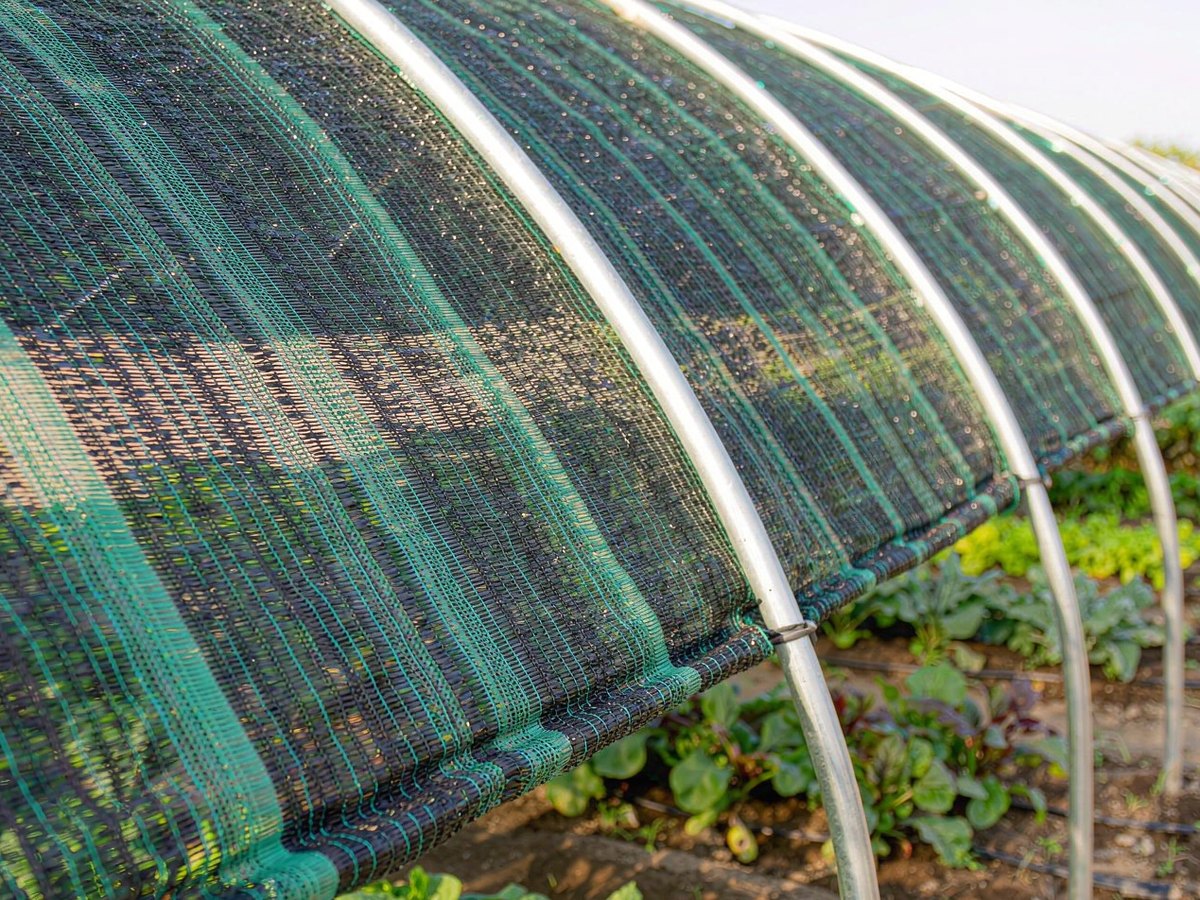
Woven Fabric · Substrate · Shade Net
Orientation stress · ground-surface environment · mesh wind load · the unique color-fastness requirement of shade nets
These three are all open or mesh structures, sharing the core problem that: the material acquires orientation during extrusion drawing, and the orientation direction is exactly the weakest direction under UV aging. In addition, the open structure means larger surface area, more concentrated stress and higher blooming risk.
I. What they share: orientation stress + high surface area
| Common issue | Mechanism | Formulation response |
|---|---|---|
| Priority aging along orientation | Extrusion drawing orients molecular chains along the draw direction. The chain arrangement is more regular there, and the photo-oxidation chain reaction proceeds along the oriented chains, manifesting as cracking along the filament direction | Stabilization must be completed before drawing; choose a high-Mw system compatible with orientation and not excessively consumed during processing |
| Stress concentration at mesh edges | Weaving tension leaves both warp and weft pre-tension; nodes and hole corners are stress-concentration points where UV embrittlement starts and rapidly propagates | Anti-migration (anti-blooming) matters: additive exudation forms an embrittlement start zone at mesh edges |
| Repeated wind flapping | Shade and insect nets in coastal and open areas endure long-term cyclic wind load, causing mechanical fatigue; uneven tension or loose installation significantly accelerates it | Mechanical retention matters more than appearance; combine with installation norms (even tensioning, reserved expansion allowance) |
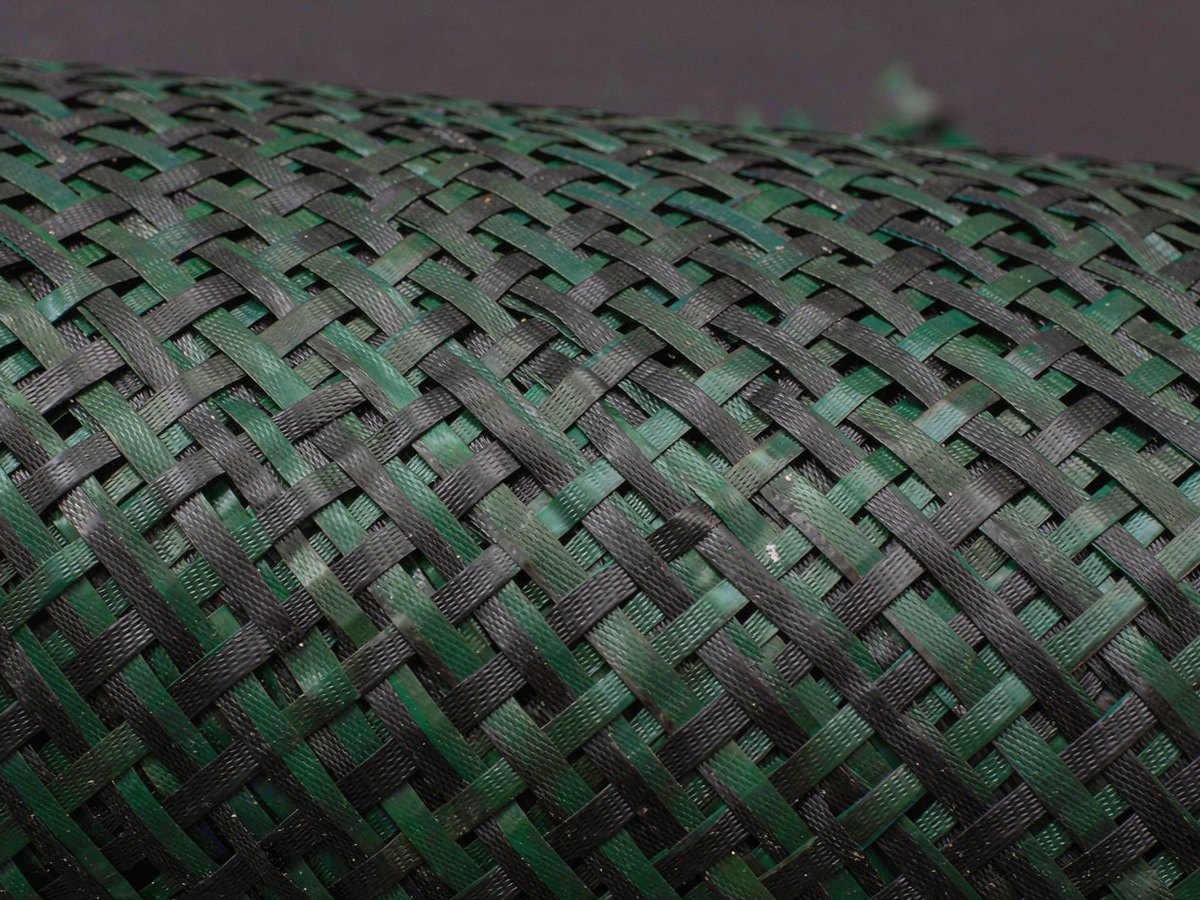
The warp-weft difference of woven structures means aging performance must be evaluated separately in machine and transverse directions; single-direction testing easily masks problems.
II. The specifics of the three product types
2.1 Woven fabric / weed-control fabric: long-term contact with soil
The service environment of weed-control, anti-seepage and horticultural cover fabrics is the soil surface: long-term high humidity, soil-mineral catalyzed oxidation, rhizosphere microbial activity, and frequent repeated trampling and agricultural-tool scraping. Service life is typically claimed at 3–8 years, far longer than mulch—which is exactly why its requirements for long-term extraction and hydrolysis resistance are higher. Under southern acid soils and northern saline-alkali conditions, conventional basic HALS are more readily protonated.
Common failure modes: surface loses gloss and turns dull, feels hard and brittle, powders and cracks after sun exposure—typical signs of additive exhaustion or recycled-material admixture. When purchasing, require the supplier to provide material specifications and factory test parameters, and prioritize virgin-material products when sampling.
2.2 Substrate fabric: greenhouse inner liner, ground cushion, thermal-blanket liner
Substrate fabrics sit "between film and soil" or "between greenhouse film and thermal blanket"; two features make them different from outer-layer materials:
- Long-term light blockage: low illuminance and low temperature mean low photo-aging pressure, but near-saturated humidity makes it a purely aqueous-vapor environment—where antioxidant and hydrolysis stability matter more than UV resistance.
- Friction and adhesion with the film surface: an embrittled substrate fabric gets torn away together when the film is removed, or its debris stays on the original film. Here, surface friction and anti-migration directly determine the use experience.
The thermal-blanket liner has another special risk: long-term low temperature + high humidity + repeated folding; at low temperature molecular-chain mobility is limited and the activation efficiency of the antioxidant system drops, making embrittlement risk higher than at room temperature.
2.3 Shade net: the only category where "color must also be managed"
Shade nets, green nets and black nets have clear appearance and color-fastness selling points; distributors first check whether the color is uniform and whether it fades. This is completely different from greenhouse and mulch films. At the same time, they are often in the same greenhouse with chlorine-based disinfectants and sulfur-containing pesticides, so chemical resistance in anti-corrosion and anti-mold scenarios is also a variable.
| Category | Common resin | Mesh type | Color strategy | Formulation key |
|---|---|---|---|---|
| Black shade net | PP monofilament / PE | 6-needle / 8-needle | Carbon-black screen | Carbon black 2–3% provides main screen; HALS still needed to cover bands and thermal oxidation black cannot; 3–5 year life |
| Green / blue shade net | PP monofilament | 6-needle / 8-needle | Color fastness required | Colorant dispersion must be uniform (otherwise color-stripe differences); primary antioxidant is key to color retention; use a heat-stable antioxidant combination |
| White insect net | PP | 40–60 mesh | White semi-transparent | No carbon black; relies entirely on a chemical stabilization system; depends on high-Mw extraction-resistant HALS |
| Silver-black / black-white net | PE / PP | 6-needle / 8-needle | Two-color both sides | Silver face reflects UV, reducing part of the load, but black face still needs a complete anti-aging system |
III. Tiangang products & acceptance recommendations
Acceptance method recommendations
- Use xenon lamp, not QUV: woven and shade-net types face long-term outdoor exposure; lifetime extrapolation needs the support of GB/T 16422.2 xenon-arc method; QUV is only for formulation screening.
- Test machine and transverse directions separately: woven structures differ in warp and weft performance; samples must be prepared separately.
- Extraction test is mandatory: do water extraction (simulating rain washing) and IR/liquid analysis on samples before and after aging to confirm the additive is still there—this is the most easily skipped key item for nonwoven and woven types.
- Evaluate color fastness with xenon, not QUV: color change involves visible light and the colorant system; QUV only reflects the UV band, while xenon's full spectrum is closer to real sunlight fading behavior.
One sentence summary
Nonwoven's enemy is "extraction," mulch's enemy is "contradiction," greenhouse film's enemy is "sulfur-chlorine high temperature," and woven fabric, substrate and shade net's enemy is "orientation and stress."
Four topics, four formulation logics, four acceptance methods—this is why Tiangang studies agricultural covering materials separately, and why we prefer to first ask clearly which type you make, rather than directly recommending a grade.
Certifications
- National High-Tech Enterprise
- Vice Chairman Unit, China Plastics Processing Industry Association (CPPIA)
- Vice Chairman Unit, Agricultural Plastics Branch, China Agricultural Plastics Application Technology Society
- Member, Ageing Methods Subcommittee, National Technical Committee on Plastics (SAC/TC15/CS5)
- Member, Society of the Plastics Industry (SPI), USA
Recommended Products
Products
UV Absorbers

- Tiangang elected Executive Deputy Director Unit of CPPIA Agricultural Film Committee
- Tiangang wins Leading Award at Beijing TV Innovation Institute finals
- Tiangang concludes CHINAPLAS 2023 on a high note
- First industry-academia-research base in Weishanzhuang Town lands at Tiangang
- Tiangang-Tinaco BUCT scholarship award ceremony 2021-2022