Greenhouse Film Weatherability: Solutions for High Sulfur, High Chlorine, High Temperature and Back-Panel Aging
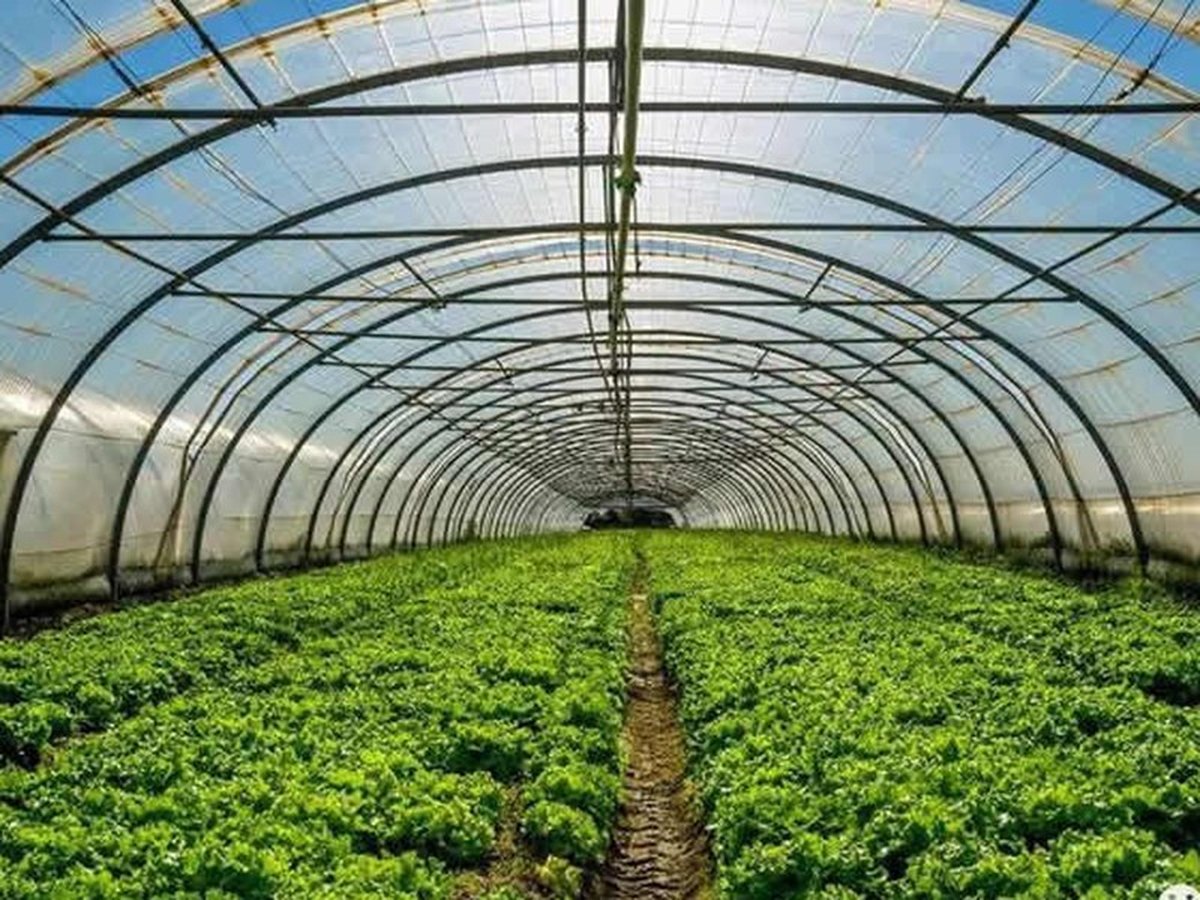
Greenhouse Film: Weatherability Under High Sulfur, Chlorine and Temperature
Sulfur/chlorine pesticide fumigation · in-shed high-temp hot spots · back-panel (inner-face) aging · xenon + fumigation acceptance
Greenhouse film is the most technically demanding class of agricultural covering material. It must work continuously for 2–5 years in an environment simultaneously containing UV, high temperature, saturated humidity and sulfur/chlorine pesticide fumigation. More importantly: it is not a homogeneous body—the aging pressures on the outer, inner and middle layers are completely different.
I. The triple harshness: sulfur, chlorine and high temperature are additive, not parallel
| Factor | Source | Failure mechanism / threshold |
|---|---|---|
| High sulfur | Lime-sulfur mixture, Bordeaux mixture, sulfur fumigation disinfection | Sulfide sublimates or fumigates onto the film, forms salts with basic hindered amine, neutralizing light-stabilizing ability. HS-944-class begins obvious deactivation at about 300 ppm |
| High chlorine | Chlorine pesticides, soil disinfectants, coastal chloride vapor | Same as above, and chlorine's protonation ability is stronger with a lower threshold. Significant deactivation at about the 20 ppm level |
| High temperature | In-shed 60–80°C in summer; higher at film-galvanized-frame contact points | Accelerates the oxidative chain reaction itself; accelerates additive volatilization and migration; drives already-deactivated products out of the system. Products with 10% weight-loss temperature below 300°C see continuously declining effective content under long-term high temperature |
The three together are the hardest problem. Looked at separately, each has a countermeasure. The difficulty is that they accelerate each other: sulfur first poisons the light stabilizer, high temperature then drives both the poisoned product and the residual additive away, while the unprotected PE backbone simultaneously chain-scissions under UV and high temperature. So "just add more HALS" is never the answer—the amount added would itself be consumed. One must chemically replace the "protonatable basic nitrogen."
II. Under co-extrusion, the three layers face completely different aging pressure
Modern PO film is generally 3- or 5-layer co-extruded, each layer with a different function: the outer layer faces the sun and handles anti-aging and anti-puncture; the middle layer handles mechanical strength and thermal insulation; the inner layer is the anti-drip/anti-fog layer (PO film uses a coating process). The additive distribution and aging pressure differ by layer.
| Layer | Aging pressure | Formulation response |
|---|---|---|
| Outer layer (sun side) | Strongest direct UV + daytime high temperature; photo-oxidative chain degradation most direct, surface first shows cracking and embrittled edges | Concentrate HALS / NOR on the outer layer as the main anti-aging; use polymeric high-Mw products for extraction resistance |
| Middle layer (strength/insulation) | Infrared radiative heating + day-night temperature cycling; mainly thermal-oxidative degradation, mechanical retention slowly falls; insulation performance then decays | Antioxidant base (AO-427 / 1010 / 168), HALS for long effect |
| Inner layer / back panel (shed side) | Saturated humidity + condensation film + fumigant pesticides settling directly + anti-drip agent migration | Anti-drip function attenuates first (water droplets grow from small to large, dripping at fixed positions); then inner-face embrittlement, often failing earlier than the outer layer. Acid-resistant system must cover the inner layer; anti-drip-agent/light-stabilizer compatibility must be evaluated together |
The greenhouse film's inner surface is long under saturated humidity and a condensation-water environment, where fumigant pesticides preferentially settle—the main reason inner-layer aging is often faster than outer.
III. "Clearly dosed yet still bursts" — four real reasons
1. The light stabilizer has already been protonated and deactivated
This is the primary reason and most easily misjudged as "insufficient dosage." More dosage only delays deactivation, not solving the structural problem. Discrimination method: take film samples of the same formulation; treat one group with sulfur/chlorine fumigation then xenon aging, and the other with xenon aging directly; compare the mechanical-retention difference. A large difference = severe deactivation.
2. Already consumed during processing
Blown-film temperature 190–220°C; excessive residence time or shear lets HALS be consumed and degraded already in the melt stage. Factory test may still pass, but by the time it reaches the user the margin is insufficient. Response: choose high-Mw products with good thermal stability, use masterbatch pre-dispersion for uniform dispersion, and shorten high-temperature residence.
3. Synergistic consumption of thermal and photo oxidation
At 60–80°C in the shed, the antioxidant is rapidly exhausted while the backbone, protected by the light stabilizer, still slowly thermally oxidizes. When the antioxidant is later exhausted, performance drops off a cliff. Response: pair primary/secondary antioxidants; AO-427, with outstanding thermal stability and processing-stabilization function, covers both ends.
4. Physical hot spots and stress fatigue
At film-frame contact points temperature can reach 80°C, forming hot spots; on windy days the film continuously flaps against the frame, and local repeated stress produces fatigue cracks. This is a structural problem, not an additive problem—but engineering can significantly extend life by thermally insulating at film-frame contact (white plastic-tape binding or a water-based coating).
IV. Solution & acceptance: judge by industry-standard methods
4.1 Criterion: T/CPPIA 12-2021
| Item | Requirement | Note |
|---|---|---|
| Tensile strength retention (MD, TD) | ≥ 60% | Either direction below 60% = fail |
| Nominal elongation-at-break retention (MD, TD) | ≥ 60% | |
| Pesticide sulfur residue (use ≤1 yr) | ≤ 500 mg/kg | Tiered by promised service life; longer life allows higher residue |
| Pesticide chlorine residue (use ≤1 yr) | ≤ 100 mg/kg | |
| Use 1–2 yrs | S ≤ 1000 / Cl ≤ 150 mg/kg | |
| Use >2 yrs | S ≤ 2000 / Cl ≤ 180 mg/kg |
Tiangang is one of the drafting units of this standard. T/CPPIA 12-2021 is under the purview of the China Plastics Processing Industry Association; among its 19 drafting units is Beijing Tiangang Auxiliary Co., Ltd. The drafters include Qin Lijie, Secretary-General of the China Agricultural Plastics Application Technology Society, Sinopec Beijing Chemical Research Institute, and leading greenhouse-film enterprises such as Huadun Xuehua, Yuxi Xuri, Kelun Plastics and Shandong Qingtian. In other words, the industry yardstick used to judge "whether a pesticide-resistant greenhouse film passes" was co-authored by Tiangang.
4.2 Test procedure (the real challenging test)
- Sample grouping: prepare two groups each in machine and transverse directions, one as control.
- Sulfur/chlorine pesticide contact treatment: fumigation or immersion. For sulfur-fumigation-resistant film, superpose daily sulfur fumigation for 1–3 months of intensified conditions, simulating the real greenhouse environment—this is the true meaning of "high sulfur, high chlorine."
- Xenon-arc artificial-weathering aging per GB/T 16422.2: irradiance 0.51 W/m² (340 nm), black-panel temperature 65±3°C, cumulative dose in kilo-ly (kly). Note the black-panel temperature of 65°C itself constitutes the third pressure.
- Tensile property determination per GB/T 1040.3: measure tensile strength and nominal elongation at break, calculate retention relative to unaged sample, judge MD and TD separately.
Related base standards: PE mulch film complies with GB 13735; EVA greenhouse film with GB/T 20202; fully biodegradable mulch film with GB/T 35795.
4.3 Tiangang solution & products
V. Tiangang's own empirical data
| Source / significance | Data |
|---|---|
| Xichang grape dedicated-film field trial | >20 pesticide sprays per season, heavy lime-sulfur use; at 18 months tunnel test among 7 hindered-amine samples, only T-69 + HS-625 still met standard; the other 5 had retention <50% at aging endpoint. Report at the 2021 Nanchang annual meeting of the China Agricultural Plastics Application Technology Society (Secretary-General Qin Lijie) |
| XT-8 long-cycle tunnel test | Used alone or blended with HS-625, field tunnel test 38 months mechanical retention >50%. Tiangang product technical data; versus the prevailing domestic situation of general failure within 2 years |
| HS-362 film system | Xenon accelerated aging, elongation-at-break retention significantly improved, corresponding to a longer field cycle. Tiangang blended high-Mw system, Mn >2000, 10% weight-loss >350°C |
One sentence on greenhouse film
The difficulty of greenhouse film has never been "resisting UV," but under the triple superposition of high sulfur, high chlorine and high temperature, keeping the light stabilizer alive to the end of its service life. This requires chemically replacing the protonatable basic nitrogen—from N-H to N-R (polymeric low-basicity HALS), then to N-O-R (NOR structure)—which is exactly Tiangang's product technology route.
If you have a batch of customer complaints of "bursts after one year of tunneling," don't rush to add more. Take their film samples and run a "fumigation + xenon" comparison test; the degree of deactivation will immediately show—more direct than any formulation discussion.
Certifications
- National High-Tech Enterprise
- Vice Chairman Unit, China Plastics Processing Industry Association (CPPIA)
- Vice Chairman Unit, Agricultural Plastics Branch, China Agricultural Plastics Application Technology Society
- Member, Ageing Methods Subcommittee, National Technical Committee on Plastics (SAC/TC15/CS5)
- Member, Society of the Plastics Industry (SPI), USA
Recommended Products
Products
UV Absorbers

- Tiangang elected Executive Deputy Director Unit of CPPIA Agricultural Film Committee
- Tiangang wins Leading Award at Beijing TV Innovation Institute finals
- Tiangang concludes CHINAPLAS 2023 on a high note
- First industry-academia-research base in Weishanzhuang Town lands at Tiangang
- Tiangang-Tinaco BUCT scholarship award ceremony 2021-2022