Topic 02: Additive Solutions for Refrigerators and Washing Machines
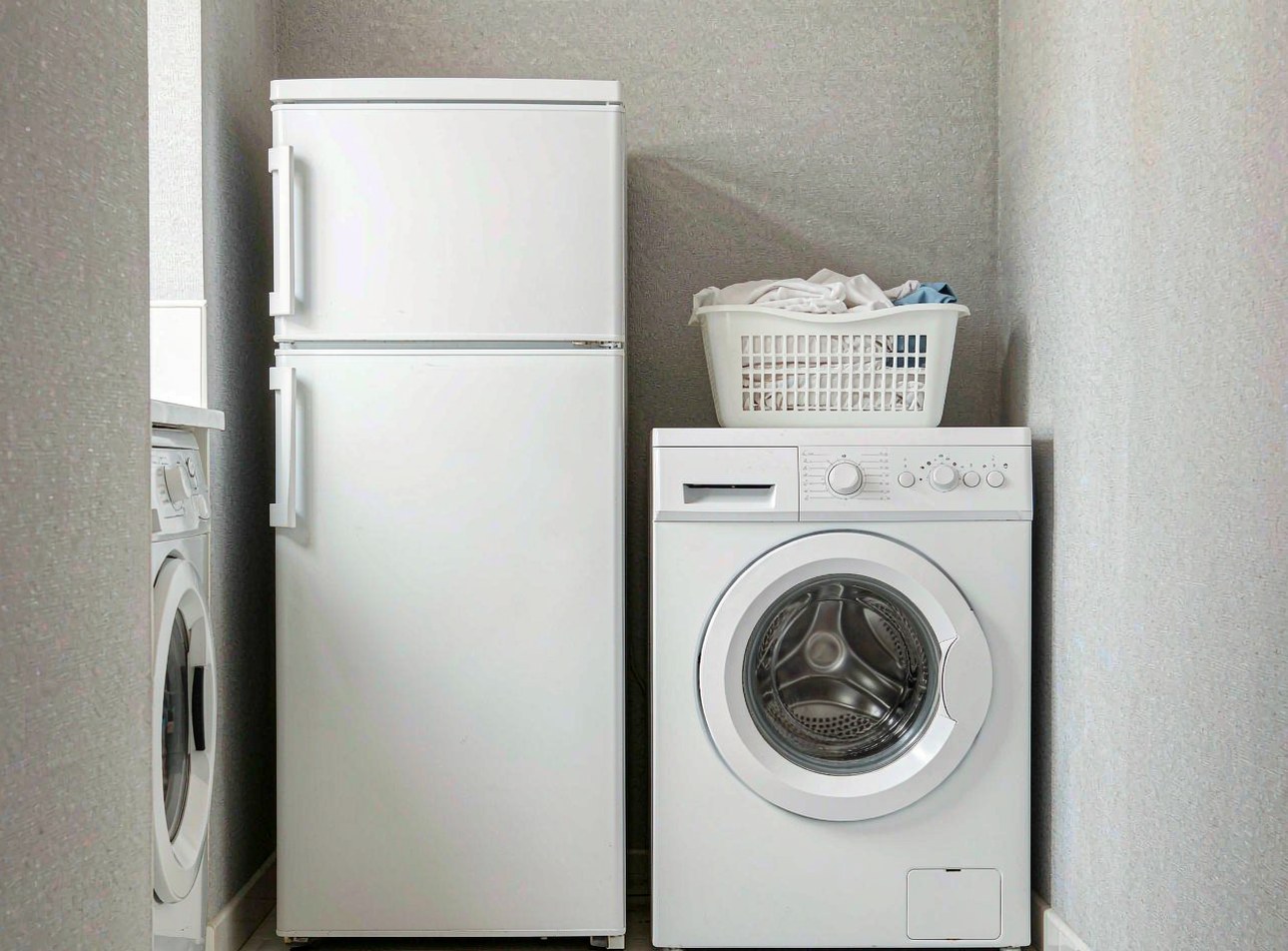
Topic 02 · Refrigerators and Washing Machines (Large White Goods)
1. Service conditions for large white-goods plastic parts
The biggest difference between refrigerators/washing machines and air conditioners is: their parts are mostly not directly exposed to sunlight, but are soaked long term in a "chemical medium + humid environment". This shifts the additive evaluation criterion from "UV resistance" to "extraction resistance".
| Component | Common substrate | Service environment | Main risks |
|---|---|---|---|
| Refrigerator liner / door inner liner | PP / ABS / HIPS sheet | Sustained low temperature + condensate + food contact | Low-temperature embrittlement, gloss loss, additive extraction |
| Door seal | PVC / TPE / elastomer | Repeated compression + sustained moisture | Age-hardening, loss of sealing |
| Drawer / storage box | PP copolymer / PETG | Food and grease contact | Yellowing, migration of extractables |
| Washing machine outer drum | PP copolymer / glass-fiber reinforced | High-speed rotation + sustained humidity + detergent | Stress cracking, additive extraction |
| Panel / control interface | ABS / PC-ABS | Long-term indoor light + frequent touching (grease) | Shade difference, gloss loss, tacky surface |
| Washing machine door cover / door ring | ABS / PC / POM | Sustained moisture + detergent exposure | Whitening, embrittlement |
2. Core challenge: additive "extraction and loss"
2.1 Why low-molecular-weight additives are easily extracted
The molecular weight of an additive determines whether it "stays" in the substrate. Low-molecular-weight grades are small and diffuse quickly, so they are readily carried away in media such as water, ethanol and surfactants; high-molecular-weight polymers are larger and diffuse slowly, with a much lower extraction rate.This is a difference at the level of physical law, not something formulation technique can fully compensate for.
2.2 The dual low-temperature + humidity test for refrigerator liners
Refrigerator fresh-food compartments run at 0-4°C year round, and freezer compartments below -18°C. Low temperature reduces polymer chain-segment mobility and causes some additives to exude; at the same time, the sustained high humidity from condensate accelerates hydrolysis and extraction.Liner sheet is commonly HIPS and ABS, and the oxidation rate of the butadiene phase under low temperature and high humidity should not be overlooked.
2.3 Mechanical degradation of the washing machine outer drum
At high rotation speeds the outer drum bears centrifugal force and vibration - a classic triple-coupled condition of "stress + humidity + chemical medium". As aging proceeds, chain scission lowers impact strength, eventually leading to stress cracking and even leakage - a direct safety risk, not an appearance issue.
3. Tiangang's recommended formulations for large white goods
The following are starting points (by weight), based on conventional injection molding / sheet forming. Exact loadings should be confirmed in light of the substrate and contact medium.
| Component / substrate | Tiangang recommendation | Effective loading | Why this one |
|---|---|---|---|
| Refrigerator liner sheet PP / HIPS, sustained condensate |
HS-962 Blended light-stabilizer package |
0.4% – 0.6% | Blended from high-molecular-weight HALS + succinate-type HALS (food-contact approved in some countries), water-extraction resistance was the development premise of this grade, aimed squarely at sustained condensate soaking |
| Door seal PVC / TPE elastomer |
HS-300 High-molecular-weight low-alkalinity HALS |
0.3% – 0.5% | Low volatility and low migration, not prone to migrate to the surface in elastomers; high effective nitrogen content, significantly improving weather resistance across just 0.1-0.8% |
| Drawer / storage box PP copolymer, food contact |
HS-362 Blended light-stabilizer package |
0.4% – 0.6% | The ratios of all components in the blending system are validated; for food-contact parts we recommend requesting TDS / migration data from Tiangang before finalizing loadings |
| Washing machine outer drum PP + glass-fiber reinforced, detergent environment |
HS-962 or T-70 Blended additive package |
HS-962 0.5% – 0.7% T-70 feed 0.6% - 0.9% |
Detergent + glass-fiber stress is a dual coupling that tests both extraction resistance and dispersibility; for glass-fiber systems we recommend granular blended packages, as powders are readily adsorbed by filler, causing uneven distribution |
| Washing machine panel Paint-free ABS / PC-ABS |
T-81 Dedicated pre-blended package for modified materials, 50%±2.5% |
Feed 0.5% - 0.8% | Panels contact grease frequently and are most sensitive to blooming.T-81's low-bloom formulation targets exactly this condition, sparing paint-free parts the usual frost-tuning formulation process |
| Door cover / door ring ABS / PC / POM, sustained moisture |
HS-962 Blended light-stabilizer package |
0.4% – 0.6% | POM is processed at relatively high temperatures, and HS-362's 105-120°C softening point is more favorable here; if higher heat resistance is required, switch to the HS-362 solution |
| Liners for export models + high-humidity acid-rain conditions |
HS-962 + XT-8 | HS-962 0.5% XT-8 0.15% – 0.25% |
The NOR structure does not react with acidic substances, 38 months of field greenhouse exposure with mechanical property retention above 50%; REACH / TSCA registration complete |
4. Validation methods for extraction resistance
Extraction resistance cannot be measured by ordinary accelerated aging. Tiangang recommends the following combined validation:
| Method | Conditions | Evaluation metrics | Applicable scenarios |
|---|---|---|---|
| Water-boiling extraction | Deionized water at 95°C, 24 h | Surface shade difference and hardness change after extraction | Refrigerator liners, door seals |
| Detergent immersion | 1% household detergent at 70°C × 168 h | Gloss retention, mechanical retention | Washing machine outer drums, door rings |
| Water extraction | Boiling water reflux, 24 h | Additive residue (extract analyzed by HPLC) | General extraction-resistance validation |
| Grease contact | ISO 1667-2 food-grade grease simulant | Migration levels, sensory impact | Food-contact drawers and internal parts |
| Artificial aging + extraction in series | QUV 2000 h → detergent immersion | Overall durability | Most stringent validation for export models |
5. Process points
- Sheet forming (liner): For ABS/HIPS sheet, the recommended extrusion temperature is ≤230°C to avoid over-oxidation of the butadiene phase; if the sheet surface is painted, confirm the additives do not interact with the coating
- Glass-fiber reinforcement (outer drum): Glass-fiber surfaces adsorb additives, so granular (FD) products are recommended to improve dispersion and avoid locally insufficient concentration
- Regrind use: When regrind exceeds 20%, increasing the antioxidant by 30-50% is recommended to prevent strength loss from repeated thermal history
- White internal parts: Titanium dioxide must be rutile type; we recommend proprietary blended packages with stable initial color such as HS-362 to control initial color and suppress yellowing
Are your white-goods products also facing additive extraction and loss?
Tell us your substrate and contact medium, and Tiangang can help design an extraction-resistance validation protocol and provide a formulation starting point.
Contact us · 400-094-4362Certifications
- National High-Tech Enterprise
- Vice Chairman Unit, China Plastics Processing Industry Association (CPPIA)
- Vice Chairman Unit, Agricultural Plastics Branch, China Agricultural Plastics Application Technology Society
- Member, Ageing Methods Subcommittee, National Technical Committee on Plastics (SAC/TC15/CS5)
- Member, Society of the Plastics Industry (SPI), USA
Recommended Products
Products
UV Absorbers

- Tiangang elected Executive Deputy Director Unit of CPPIA Agricultural Film Committee
- Tiangang wins Leading Award at Beijing TV Innovation Institute finals
- Tiangang concludes CHINAPLAS 2023 on a high note
- First industry-academia-research base in Weishanzhuang Town lands at Tiangang
- Tiangang-Tinaco BUCT scholarship award ceremony 2021-2022