Topic 01: Additive Solutions for Air Conditioning and Refrigeration Appliances
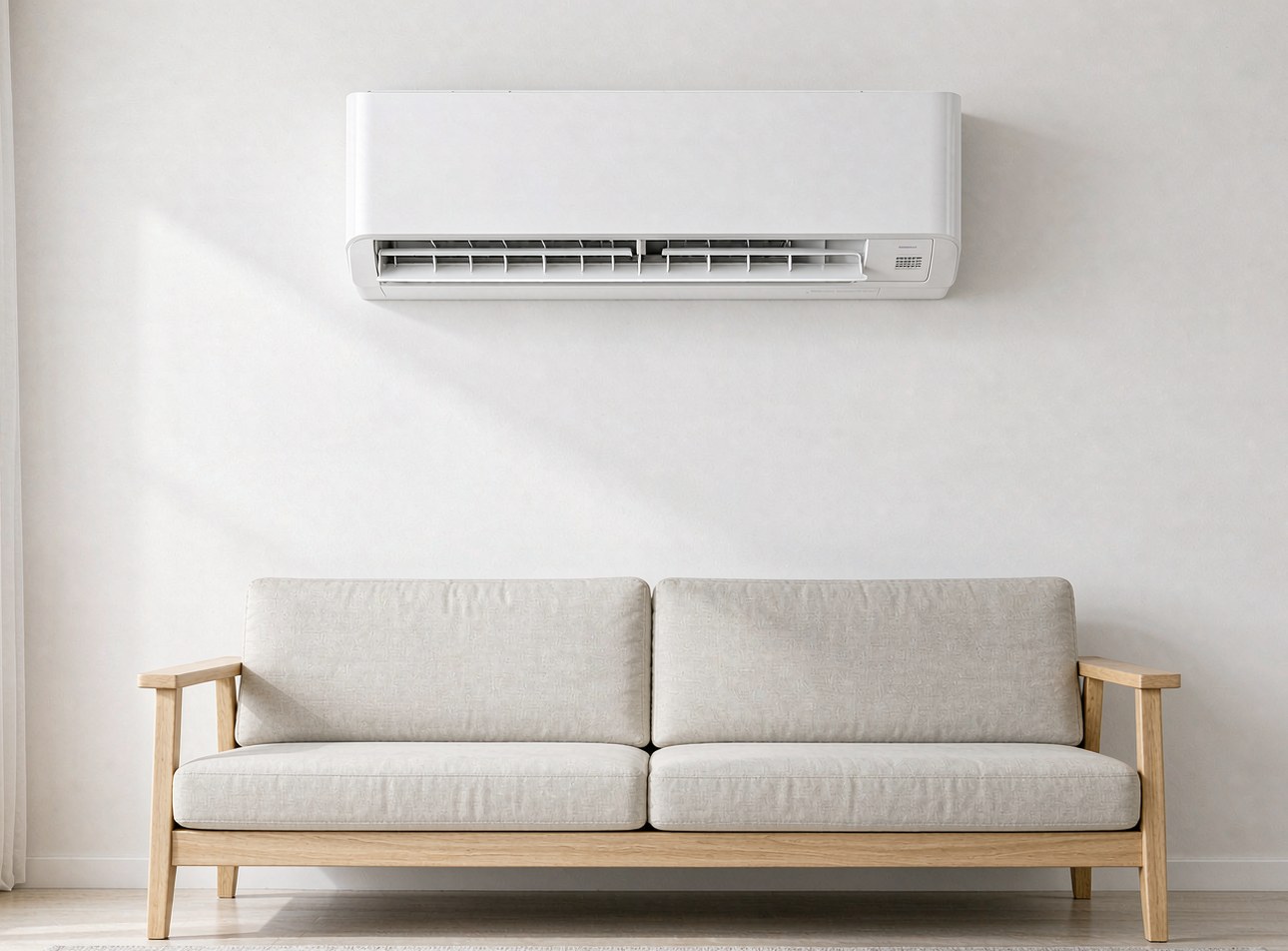
Topic 01 · Air Conditioning and Refrigeration Appliances
1. Service-condition map for AC plastic parts
The plastic parts of an AC serve in distinctly different environments, so no single formulation fits all. This is the first thing Tiangang does when serving AC customers: break the whole unit down into components and regroup them by exposure grade.
| Component | Common substrate | Service conditions | Aging risks | Weather-resistance target |
|---|---|---|---|---|
| Outdoor unit housing / side panel | PP / ABS / AS | Year-round outdoors: sunlight + rain + temperature swings | Yellowing, powdering, gloss loss | UV 2000–4000 h |
| Outdoor grille / air deflector | PP / ABS | Outdoor + antistatic requirement | Yellowing, electrostatic dust pickup | UV 2000 h+ |
| Indoor unit panel / housing | ABS / HIPS / PC-ABS | Long-term indoor light exposure + nearby high temperature | Shade difference, gloss loss | UV 1000–2000 h |
| Chassis / bracket | PP / glass-fiber reinforced | Load-bearing + outdoor + vibration | Stress cracking, embrittlement | UV 2000 h+ |
| Internal tubing / connectors | PP / PA | Sustained thermal environment (near the compressor) | Thermo-oxidative aging, embrittlement | Focus on long-term thermal stability |
2. Three core challenges for AC components
Challenge 1: Long-term exposure of outdoor units - the respective weaknesses of PP and ABS
PP The main chain contains tertiary carbon atoms, which readily undergo hydroperoxide decomposition under UV exposure; it ages far faster than ABS and is the most "sun-fearing" material for outdoor AC parts. PP chain scission also lowers melt viscosity, bringing strength loss and dimensional change.
ABS is the opposite case: the butadiene phase itself is not aging-resistant, but its overall thermo-oxidative resistance is better than PP. Its weakness lies in yellowing - the hydroxyl groups generated by butadiene-phase oxidation turn the material yellow, while AC housings are mostly white or light-colored and extremely sensitive to yellowing.
So the protection strategy differs for the two substrates: PP focuses on "inhibiting the free-radical chain reaction", ABS on "suppressing yellowing + retaining gloss".
Challenge 2: Long-term shade control for indoor units
Modern AC panels widely use paint-free processes (metallic, pearlescent, matte). Such appearance parts are extremely sensitive to shade difference ΔE - the initial shade difference brought in by the additives themselves, and shade drift during storage, can directly scrap appearance parts. At the same time, surface migration of low-molecular-weight additives forms a white "frost" haze that destroys the paint-free appearance outright.
Challenge 3: The antistatic vs. weather-resistance conflict in deflectors and grilles
Deflectors and grilles need antistatic properties to avoid dust pickup, but most antistatic agents are weakly acidic or contain hydrophilic groups, which antagonize classic HALS; the hydrophilic groups can also accelerate moisture adsorption, affecting long-term weather resistance. This is a relatively hidden compatibility challenge among AC components.
3. Tiangang's recommended formulations for the AC industry
The formulations below are starting points (by weight), based on typical injection-molding processes. Exact loadings should be confirmed with Tiangang's technical center in light of wall thickness, color system and target indicators.
| Component / substrate | Tiangang recommendation | Effective loading | Why this one |
|---|---|---|---|
| Outdoor unit housing PP / ABS, light colors |
HS-362 Blended light-stabilizer package |
0.5% – 0.8% | Proprietary compounding system, Mn>2000, 10% weight loss above 350°C, softening 105-120°C; light stabilization and antioxidation are already synergistically formulated, customers no longer need to compound primary + secondary antioxidants themselves |
| Outdoor grille / air deflector PP + acidic antistatic agent |
HS-300 High-molecular-weight low-alkalinity HALS or the T-78 blended package |
HS-300 0.3% – 0.5% T-78 feed 0.6% - 1.0% |
Low alkalinity is a hard requirement for coexisting with acidic antistatic agents.HS-300 is less alkaline than conventional HALS and significantly improves weather resistance at just 0.1-0.8%; T-78 is a pre-blended package, so customers do not need to solve compounding ratios themselves |
| Indoor unit panel Paint-free ABS / PC-ABS |
T-81 Dedicated pre-blended package for modified materials, 50%±2.5% |
Feed 0.6% - 1.0% | Carrier MFI>10, with a good rheological match to PP/ABS modified pellets; the formulation is fixed at the factory end, ready to use out of the bag, sparing paint-free parts the most troublesome blooming and shade-difference trial compounding |
| Chassis / bracket Glass-fiber reinforced PP |
T-70 Blended additive package or HS-962 |
T-70 feed 0.6% - 0.9% HS-962 0.4% – 0.6% |
High glass-fiber filler content tends to adsorb powdered additives, causing uneven dispersion; granular blended packages disperse better than powders - the direct reason for choosing granules over powder |
| Models exported to Europe All outdoor parts + acid-rain conditions |
HS-362 + XT-8 Blended package + NOR compound |
HS-362 0.6% XT-8 0.15% – 0.25% |
XT-8 has an N-OR structure, does not react with acidic substances, is resistant to sulfur at 3000-7000 ppm and chlorine at ≤850 ppm; REACH / TSCA registration is complete, with full compliance documentation for export models.Can be used alone or compounded with HS-625 |
| Portable / mobile air conditioners Frequent handling + outdoor |
T-78 Blended additive package |
Feed 0.6% - 1.0% | Handling impact and exposure are dual conditions, so the formulation must balance weather resistance and extraction resistance; T-78's pre-blended system covers both at once |
4. Key process points
4.1 Addition sequence and compatibility precautions
- Resin + masterbatch / filler high-speed mix 2 min
- Blended additive package (T-81 / T-78 / T-70 and other granular types), mix 3-4 min until fully melt-dispersed
- Low-alkalinity HALS such as HS-300 (if added separately) last, then discharge immediately after mixing 3 min
- AO-427 (optional for dyed systems) add together with the masterbatch; dyeing stability is achieved during the high-temperature mixing stage
4.2 Processing temperature and thermo-oxidative control
- For ABS, the recommended injection barrel temperature is 210–240℃, avoiding extended residence above 260°C
- For PP parts, 180–220℃; keep barrel residence time within 3 minutes where possible
- When reusing regrind or edge trim multiple times, we recommend increasing the antioxidant by 30-50% to compensate for additive depletion from repeated thermal history
4.3 Key points for white and light-colored systems
White appliance housings are the touchstone of AC weather resistance. Key points:① Use rutile-type titanium dioxide; the photocatalytic activity of anatase-type TiO2 accelerates resin degradation;② Pair with low-molecular-weight HALS such as HS-450 to improve initial color;③ Avoid easily migrating grades such as UV-P. For metallic / pearlescent paint-free systems, watch pigment adsorption of HALS and increase the loading by 20-30% where necessary.
5. Recommended validation indicators
| Indicator | Test standard | Outdoor parts, recommended | Indoor parts, recommended |
|---|---|---|---|
| Artificial accelerated aging | GB/T 16422.2 / ASTM G154 (QUV) | No significant powdering at 4000 h | No significant powdering at 2000 h |
| Shade difference (ΔE) | GB/T 11944 (ΔE) | ΔE ≤ 2.0 | ΔE ≤ 1.5 |
| Gloss retention | GB/T 8807 (60°) | ≥ 80% | ≥ 85% |
| Tensile / impact retention | GB/T 1040 / GB/T 1043 | ≥ 70% | ≥ 75% |
| Surface powdering grade | GB/T 15595 | ≥ grade 4 | ≥ grade 4 |
Need a formulation assessment for your specific model?
Tell us your substrate, component type and target warranty period, and Tiangang's technical center will give preliminary advice within 1 working day.
Contact us · 400-094-4362Certifications
- National High-Tech Enterprise
- Vice Chairman Unit, China Plastics Processing Industry Association (CPPIA)
- Vice Chairman Unit, Agricultural Plastics Branch, China Agricultural Plastics Application Technology Society
- Member, Ageing Methods Subcommittee, National Technical Committee on Plastics (SAC/TC15/CS5)
- Member, Society of the Plastics Industry (SPI), USA
Recommended Products
Products
UV Absorbers

- Tiangang elected Executive Deputy Director Unit of CPPIA Agricultural Film Committee
- Tiangang wins Leading Award at Beijing TV Innovation Institute finals
- Tiangang concludes CHINAPLAS 2023 on a high note
- First industry-academia-research base in Weishanzhuang Town lands at Tiangang
- Tiangang-Tinaco BUCT scholarship award ceremony 2021-2022