Research and Application Progress on Light Stabilizer Mechanisms
There are many varieties of light stabilizers, which are generally classified into four categories according to their mechanism of action:
1. Light screening agents, including carbon black, zinc oxide and some inorganic pigments;
2. UV absorbers, including organic compounds such as salicylates, benzophenones, benzotriazoles, triazines and substituted acrylonitriles;
3. Quenchers, mainly organic nickel compounds;
4. Free-radical scavengers, mainly hindered amine derivatives. Among light stabilizers, hindered amines are the fastest growing worldwide. Because hindered amine light stabilizers (HALS) have the ability to capture free radicals and decompose peroxides, their stabilizing effect is 2 to 4 times higher than that of UV absorbers. Therefore, since HALS were first developed in Japan in the 1970s, they have received widespread international attention, been extensively developed and applied, and become one of the fastest-growing additives. Many foreign chemical companies have successively entered the development and production of HALS. In addition to Ciba-Geigy of Switzerland and Sankyo of Japan, which were the earliest to develop HALS, American Cyanamid, B.F. Goodrich and Borg-Warner of the United States, Sumitomo Chemical and Asahi Denka of Japan, and Hoechst of Germany all developed their own hindered amine products; the former Soviet Union also studied HALS and developed a series of products. Beijing No.3 Chemical Plant, the Shanxi Institute of Chemical Industry, the Beijing Institute of Auxiliary Agents and other units also developed and produced domestic hindered amine products. In the late 1990s, with the development of the anti-thermal-oxidation stabilization function of HALS, HALS found new application fields.
Domestic research and development of HALS began in 1974. In the late 1970s, the Shanxi Institute of Chemical Industry took the lead in launching China's first HALS grade, GW540, which organically combines the hindered amine functional group with a phosphite structure and is a multifunctional HALS that still dominates the domestic consumer market to this day. Other series products include GW508, GW608, GW650 and GW310. The products of the Beijing Chemical Industry Research Institute include Jing-5 and Jing-6; the Institute of Chemistry, Chinese Academy of Sciences has PDS, etc. PDS is a polymeric hindered amine light stabilizer with good light stabilization, heat resistance, extraction resistance and compatibility with resins, but its antioxidant property is poor; when used together with certain antioxidants, it may still produce an antagonistic effect like other traditional HALS. In the past 10 years, more than 10 sets of HALS raw-material and product units have been built and put into operation in China; in addition to supplying the domestic market, some raw materials and products have also entered the international market. The new-generation polymeric light stabilizer GW622 developed domestically has a 300 t/a unit built at the Huashan Auxiliary Plant in Chaoyang District, Beijing; the Beijing Chemical Industry Research Institute combined GW622 with the compound antioxidant B215 to form a non-toxic anti-aging system, replacing the flawed GW540-2002 system for use in polyethylene agricultural film, with an anti-aging effect lasting more than 18 months; the GFW100 HALS developed and produced by the Institute of Chemistry, CAS has good compatibility with resins and is safe to process, and can be used in low-density polyethylene agricultural film and cable manufacturing; the Shanxi Institute of Chemical Industry successfully developed a process route for the direct synthesis of triacetoneamine from acetone and ammonia, and on this basis undertook the development of the polymeric HALS GF901 and GF902 and the reactive HALS GW-628 and UV-419 using triacetoneamine as raw material, which have now achieved breakthrough progress; the development of the non-basic HALS grade GW757 is also being explored. In addition, other domestic research institutes have also achieved certain results in HALS research,
With the rapid development of China's petrochemical industry, polyolefin output will increase sharply, and the minimum demand for various stabilizers will also increase accordingly. It is estimated that China's demand for light stabilizers will exceed 3,500 t and 5,000 t in 2005 and 2010 respectively. Thus, in the next few years China's demand for light stabilizers will grow rapidly, while some existing products are facing elimination, which will inevitably cause a large shortage of light stabilizers, especially HALS products.
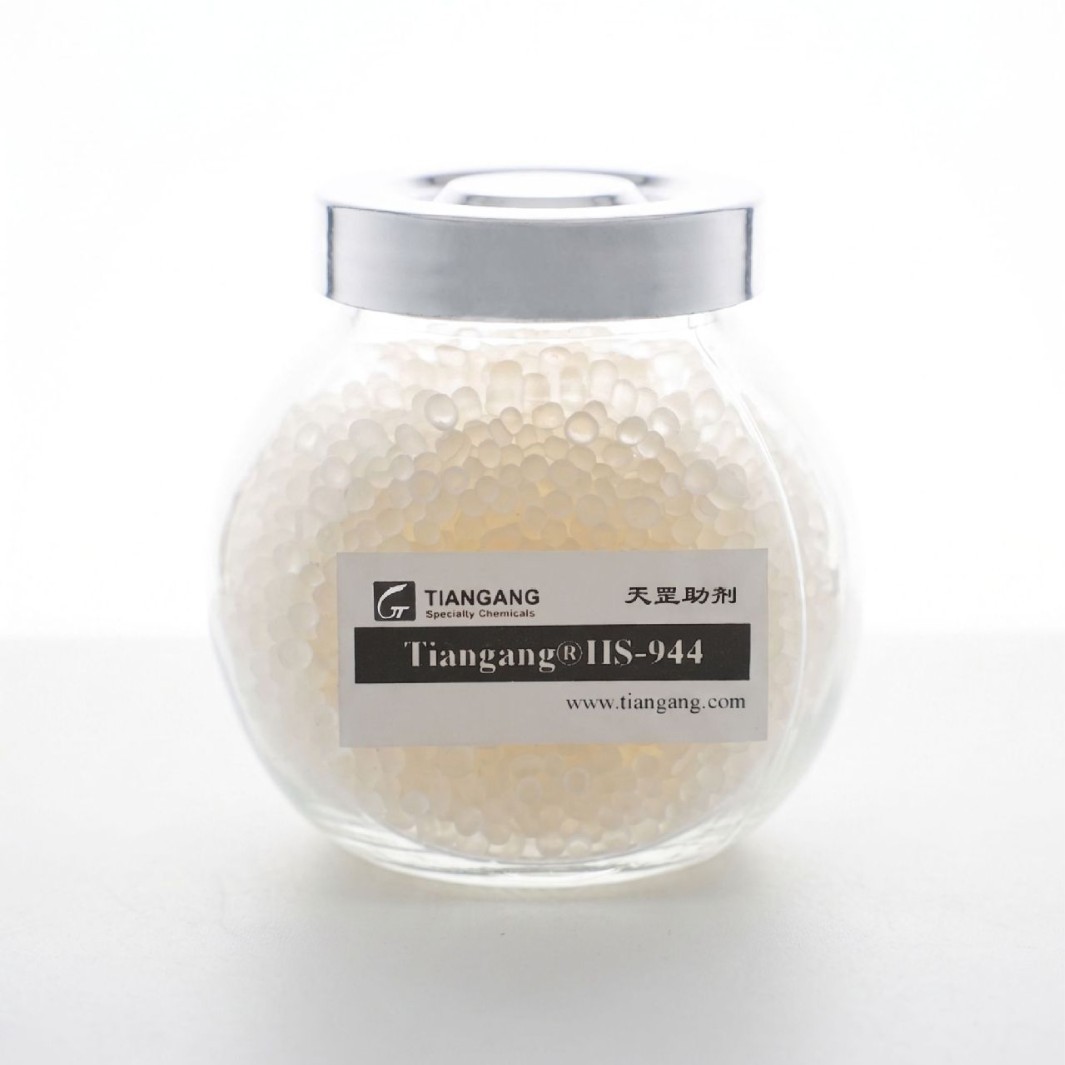
At present, the quality, variety and quantity of China's light stabilizers are far from meeting the needs of the development of synthetic materials. Therefore, in the author's view, China's light stabilizer industry should strive to develop and produce new varieties, accelerate product upgrading, and improve the light, heat stability, hydrolysis resistance and oil resistance of products. It should reduce the volatility and toxicity of products and increase their compatibility with polymers. Increasing varieties, especially high-performance, multifunctional, long-lasting and non-(low-)toxic varieties, should be the focus of production and development; compounding, high molecular weight and low basicity remain important approaches to developing new varieties. Efforts should be made to continuously reduce the cost of existing products and achieve scale operation. It is suggested that relevant departments make unified plans, rely on relevant research institutes to organize technical breakthroughs on some key intermediates and the world's dominant key products as soon as possible, and develop and produce high-efficiency multifunctional products to meet the development requirements of synthetic materials. In addition, research on the mechanisms, properties and applications of light stabilizers should be strengthened, and light stabilizer series products that meet the requirements of various products should be developed according to the characteristics of domestic raw materials.
Certifications
- National High-Tech Enterprise
- Vice Chairman Unit, China Plastics Processing Industry Association (CPPIA)
- Vice Chairman Unit, Agricultural Plastics Branch, China Agricultural Plastics Application Technology Society
- Member, Ageing Methods Subcommittee, National Technical Committee on Plastics (SAC/TC15/CS5)
- Member, Society of the Plastics Industry (SPI), USA
Recommended Products
Products
UV Absorbers

- Tiangang elected Executive Deputy Director Unit of CPPIA Agricultural Film Committee
- Tiangang wins Leading Award at Beijing TV Innovation Institute finals
- Tiangang concludes CHINAPLAS 2023 on a high note
- First industry-academia-research base in Weishanzhuang Town lands at Tiangang
- Tiangang-Tinaco BUCT scholarship award ceremony 2021-2022