Application of HALS and Light Stabilizer HS-944 in PVC
Global PVC (polyvinyl chloride) capacity reached 37.17 million t/a in 2005 and is expected to rise to 41.96 million t/a by 2010. As one of the five major general-purpose synthetic resins, PVC accounts for about 29% of total synthetic-resin consumption. In 2005, China's PVC demand surpassed that of the United States, making it the world's largest PVC consumer. In 2006, China's PVC resin output was 8.24 million tonnes, with apparent consumption of 9.19 million tonnes. PVC products are increasingly used outdoors—such as plastic window frames, pipes, wall panels, agricultural film, and automotive plastics. Improving their light stability and extending the service life of PVC products is recognized as a measure to save resources and energy and to protect the environment.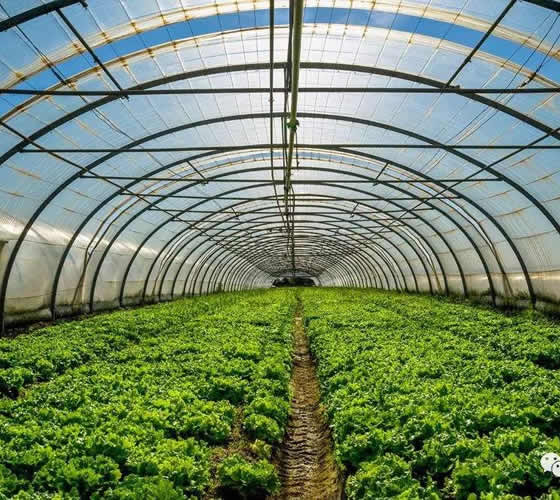
It is generally believed that the HCl generated by PVC thermal and photo degradation reacts chemically with the amino groups of the HALS piperidine ring, which hinders HALS from converting into nitroxyl radicals and capturing the free radicals produced by polymer degradation, reducing HALS activity or even completely disabling it. It has recently been found that, with advances in PVC polymerization technology, improvements in PVC quality, and enhanced efficiency of PVC stabilizers, the HCl released by PVC resin decomposition is no longer sufficient to suppress the action of HALS. There are now more and more cases of HALS being applied in PVC, and satisfactory results have been achieved.
In trials applying HALS to PVC calendered agricultural film, two HALS grades—Tiangang® HS-770 and GW-540—were compared with TIANGANG® UV-9. The conclusion was that HALS provide a light-stabilizing effect for PVC, superior to that of the benzophenone class.light stabilizer, which improves the light-aging resistance of PVC. The study holds thatUV absorberTIANGANG® UV-531 and TIANGANG® UV-9, together with HALS, show a synergistic effect in PVC greenhouse film; hindered amine light stabilizers can prevent the 'back-plate effect' in PVC greenhouse film, so it is concluded that HALS can be fully applied in PVC greenhouse film.
Data in Table 177 show that the light-stabilizing effect of using HALS alone in plasticized PVC transparent film is comparable to that of using benzotriazole-class TIANGANG® UV-326 or benzophenone-class TIANGANG® UV-531 alone; however, combined application is superior to single application. Whether used alone or in combination with the UV absorber TIANGANG® UV-531, the light-stabilizing effect of TIANGANG® HS-944 is superior to that of TIANGANG® HS-770 and TIANGANG® BW-10LD (622).
Certifications
- National High-Tech Enterprise
- Vice Chairman Unit, China Plastics Processing Industry Association (CPPIA)
- Vice Chairman Unit, Agricultural Plastics Branch, China Agricultural Plastics Application Technology Society
- Member, Ageing Methods Subcommittee, National Technical Committee on Plastics (SAC/TC15/CS5)
- Member, Society of the Plastics Industry (SPI), USA
Recommended Products
Products
UV Absorbers

- Tiangang elected Executive Deputy Director Unit of CPPIA Agricultural Film Committee
- Tiangang wins Leading Award at Beijing TV Innovation Institute finals
- Tiangang concludes CHINAPLAS 2023 on a high note
- First industry-academia-research base in Weishanzhuang Town lands at Tiangang
- Tiangang-Tinaco BUCT scholarship award ceremony 2021-2022