Company at a Glance
SINCE 1991 · POLYMER ANTI-AGEING
Making materials last longer
For more than 30 years Beijing Tiangang Auxiliary has focused on the R&D and production of light stabilizers, UV absorbers, antioxidants and functional masterbatches. Additives are a tiny fraction of any formulation, yet they directly decide how long a material lasts under UV, sulfur compounds, oxidation and flame-retardant conditions. This page is the overall capability summary; the details sit in the sections linked around it.
Eight numbers behind the capabilityAt a Glance
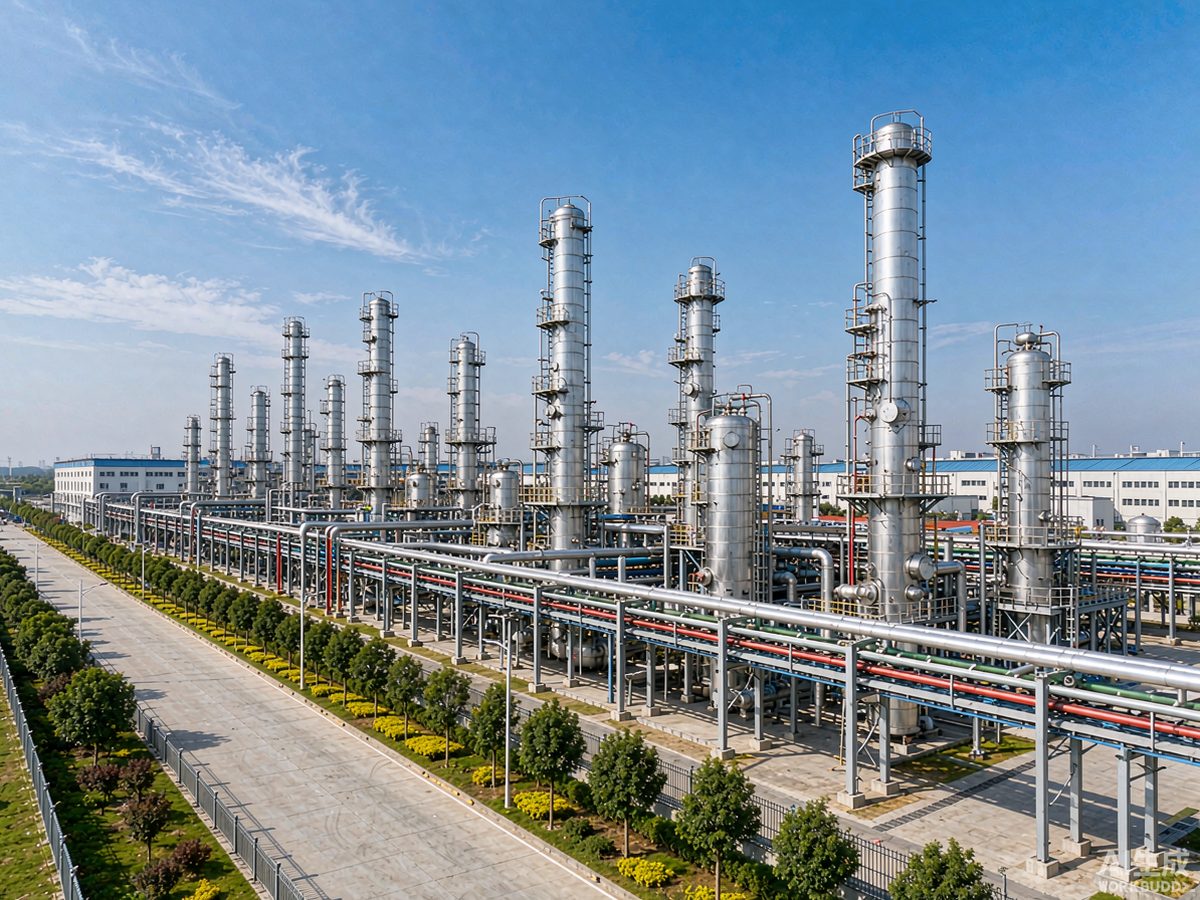
Tiangang production bases — supply reliability backed by three sites
Choosing an additive supplier starts with five questionsWhy Tiangang
Additives are under 1% of a formulation, yet they are the easiest place to get stuck: one supply interruption or one unstable batch can stop an entire customer line. And supply in this industry varies enormously — from R&D-driven original manufacturers to trading houses, the two deliver fundamentally different things. The table below is arranged by the questions a buyer actually asks.
| The buyer’s question | Typical additive supplier | Tiangang |
|---|---|---|
| Where does the product come from? | A trading role: buy, repackage, rebrand. The technical know-how stays with the original plant, so problems cannot be resolved. | In-house from intermediates to finished formulated packages; dozens of invention patents across three main lines — NOR, polymeric HALS and halogen-free flame retardancy |
| Who answers when a part fails? | Recommends the next grade, with little ability to explain the mechanism | An in-house laboratory with FTIR, XPS, colorimeter and GPC, delivering a failure diagnosis within one week: identify the cause first, then select the grade. |
| Can supply stay stable? | Single-site capacity, or dependent on an upstream plant’s schedule | Three sites — Beijing (100 mu, R&D), Gu’an (150 mu) and Cangzhou (300 mu) — with key grades supported from more than one location |
| Will the data survive a customer audit? | In-house self-inspection reports, which carry limited weight in a customer audit | CNAS accreditationA CNAS-accredited testing center plus ISO 9001, with reports recognized internationally |
| Is there technology others cannot match? | Mainly supplies established general grades | XT-8 with a CAS structure developed in-house, and FR-810A with the patented NOP™ triple-action flame retardancy — a weathering gap of 5 times |
Four proprietary flagship productsFlagship Products
Tiangang also supplies established general grades, but internally these are positioned as components within formulated packages rather than promoted on their own. The real technical barrier is the four proprietary products below — each designed against a specific, widely acknowledged industry problem.
Proprietary IP · high-MW NOR
XT-8
An N-alkoxy hindered amine with a CAS structure developed in-house, directly addressing the industry’s biggest difficulty: acid from flame retardants consuming HALS.
Weathering in FR systemsapprox. 4,000 hours vs approx. 800 hours for conventional HALS; sulfur resistance 3,000–7,000 ppm; chlorine resistance ≤850 ppm; greenhouse trial 38 monthsmechanical retention >50%
Proprietary IP · NOP™ patented flame retardant
FR-810A
Built on the international NOP™ patent, so the flame retardant system no longer releases acidic by-products, removing the consumption of HALS at the source.
Flame retardancy + light stability + thermal stabilityin one molecule; suitable for UL94 V-0 flame-retardant PP and PC/PC-ABS; the halogen-free route avoids restricted substances such as TBBPA
Proprietary IP · high-MW polymeric light stabilizer
HS-362
Solves film plate-out and long-term migration at the root; the backbone grade of the whole stabilization system.
Mn>2000; 10% weight-loss onset >350℃; combined with masterbatching to improve dispersion — two levers at once
Proprietary IP · polymeric HALS
HS-625
Designed for extraction resistance, and the answer for liquid-cooling pipes and applications in long-term contact with media — where there is no second option.
Winner of a provincial and ministerial Science and Technology Progress Award (third-party recognition of extraction resistance as a measurable property); inherently non-volatile and extraction resistant
A set of numbers that survives peer reviewProven Advantage
Where flame retardancy and weathering are required at the same time — outdoor energy storage cabinets, around EV battery packs, cable sheathing, FR-modified compounds — HALS is protonated by acidic species released from the flame retardant and stops working. Peer-reviewed literatureDOI 10.1002/app.38979measured this: under the same flame retardant system, choosing the right class of light stabilizer makes a difference of 5 times, not a marginal 10–20% improvement — the difference between passing and failing.
Accelerated ageing comparison basis: ASTM G26, water-spray cycle. The relative comparison comes from published peer-reviewed literature; Tiangang does not present these as absolute service life values.
One process variable that is easily overlooked: the same additive performs completely differently if added in the wrong order. The sequence Tiangang recommends is: acid scavenger first (hydrotalcite, epoxy-functional polymer) → then the flame retardant with assured dispersion → light stabilizer last, while monitoring the upper melt temperature limit. Under high-shear extrusion the flame retardant may partially decompose, and acid value drift in the melt is a hidden variable beyond the COA.
Two verifiable field casesProven Applications
HS-950 in HDPE floating PV pontoons extends service life from 3–5 years to 10–20 years.The work received the 2023 Ringier Technology Innovation Award. Floating PV pontoons face permanent immersion, sun and salt spray at the same time, and a crack out on the water is extremely hard to repair — one of the harshest weathering environments there is. The case has a third-party award, a clearly defined application and a quantified range: for a materials company that has to answer for service life to asset owners, insurers or investors, a third-party endorsed life figure carries far more weight than any internal test report.
— 2023 Ringier Technology Innovation Award
In greenhouse film field trials with XT-8, mechanical property retention stayed above 50% after 38 months.The normal replacement cycle for agricultural film is 1–3 years, so 38 months spans the full service cycle of most products. The figure therefore has real reference value rather than being an ideal number from accelerated laboratory conditions.
— Tiangang agricultural film field data
The complete proprietary portfolio, organised by the problem it solvesProduct Matrix
The table below is ordered by the problem solved rather than by chemical class — which is how Tiangang plans products internally: problem first, product second. General grades (antioxidants AO-1010 / AO-1076 / AO-168 / AO-B215, UV absorbers UV-326~329 / UV-P, light stabilizers HS-944 / HS-950 / HS-770 and others) are supplied as well, positioned as components within formulated packages.
| Product | Technical position | Problem solved | Product page |
|---|---|---|---|
| XT-8 | High-MW NOR light stabilizer | Acid from FR systems consuming HALS; sulfur and chlorine resistance; long-term greenhouse weathering | View |
| FR-810A | Polymeric halogen-free flame retardant (NOP™) | FR-generated acid consuming light stabilizer; yellowing of FR PP | View |
| HS-362 | High-MW polymeric light stabilizer | Film plate-out (blooming); extraction failure in recycled-content parts | View |
| HS-625 | Polymeric HALS | Films and contact-media applications sensitive to extraction | View |
| HS-962 | Polymeric high-MW system | High-temperature processing stability; Mn > 2000, 10% weight-loss onset > 350°C | View |
| HS-112 | Low-MW liquid NOR | Processing compatibility; complex formulations coexisting with acidic systems | View |
| HS-791 / HS-788 | Synergistic polymeric light stabilizer | Multi-component synergy; oligomeric synergy at high molecular weight | View |
| HS-300 / HS-330 | High-efficiency nitrogen HALS platform | High available nitrogen; low acidic interaction | View |
| AO-427 | Polymer processing aid | Plate-out and batch color variation from poor dispersion; improved melt flow | View |
| HS-6608 | PP / ABS dedicated system | Balancing weathering and processing in modified compounds | View |
| MB0607-1 / -2 | Light-stabilizing masterbatch | Masterbatch pre-dispersion — the most direct engineering answer to plate-out | View |
| TGUVFQ2001PE | UV-blocking masterbatch | Designed for thick-wall parts, where inner and outer layers weather very differently | View |
| T-68 / T-66 / T-69 | Agricultural film and turf packages | Acid rain and agrochemical resistance for film; acid-generating filled rubber systems | View |
| T-70 / T-78 / T-81 | Automotive compound packages | Weathering plus low odor; 50% ± 2.5% active content, MFI > 10 | View |
Three principles behind product design: Tiangang’s proprietary products follow three principles:• Not being consumed matters more than peak performance (accept slightly lower peak performance in exchange for surviving to the end of service life under real conditions); • Higher molecular weight beats higher loading (replace “add a bit more” with “use one that does not walk away”); • Start from the system, not from a single product (a matched package always beats one bottle).
Four R&D layers: from finding the problem to delivering the productR&D Platform
In the additives industry, the ceiling on service capability is set by testing capability. Without equipment you can only recommend from experience; with equipment you can reproduce a customer’s failure, generate data under accelerated conditions, and produce a third-party accredited report when a dispute arises. Tiangang’s R&D capability is not a single laboratory but a four-layer structure with a clear division of labour and tight interlocking.
Layer 1 | Application technology: the customer-facing front end
The core function is reproducing the customer’s failure. When a customer says the part whitened, embrittled or yellowed, the underlying chemistry may be entirely different. Tiangang’s technical team asks the same five questions on site: substrate grade, processing temperature, part thickness, intended service years, and latitude or climate.
Layer 2 | Testing center: CNAS-accredited third-party capability
CNAS reports are often accepted directly for EU CE marking and US FDA registration, avoiding the cost and lead time of repeat testing. In supplier audit questionnaires, “do you hold CNAS accreditation” is usually a required question, not a bonus one.
Layer 3 | Outdoor exposure sites: anchoring to real climate
Two exposure sites, Guangzhou and Beijing: Guangzhou represents the hot, humid, high-UV south, Beijing the dry-cold north with a pronounced seasonal light cycle. The difference in results for the same formulation across the two sites is itself proof that “weathering” is never a concept detached from its environment.
Layer 4 | Enterprise technology center: from solution to product
A team of more than 40 PhDs, master’s graduates and senior engineers works across four areas: anti-ageing formulation design, life assessment and failure analysis, new additive development, and modern equipment technology. It also hosts the China Light Industry Plastics Weathering Engineering Technology Research Center and the China Plastics Weathering Technology Laboratory.
Why Tiangang does not give a single conversion number: No universal conversion factor from accelerated hours to outdoor years exists in this industry. Xenon-arc testing is an accelerated simulation, suitable for relative side-by-side comparison; it cannot reproduce every real outdoor variable, the same duration ages plastics, coatings and rubber differently, and year-to-year variation in natural exposure can exceed ±30%. Tiangang does not use single-value conversion in external statements, and instead concludes from two tracks: accelerated testing plus real outdoor measurement.
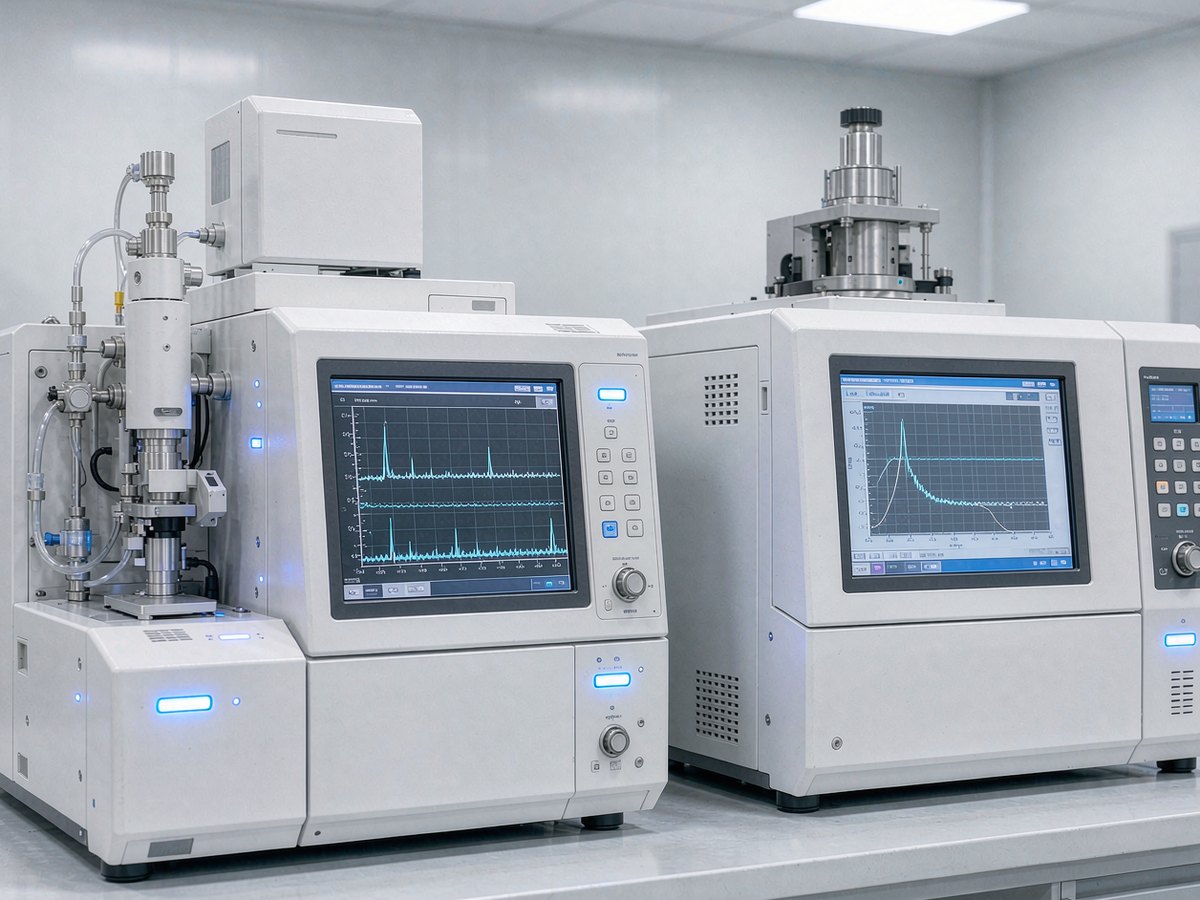
From sample to report, Tiangang’s technical service follows a fixed rhythm
How Tiangang works on a projectHow We Work
This is the standard rhythm of Tiangang’s technical service. It shows how a problem the customer cannot quite describe becomes a conclusion with data, a solution and verification.
| Stage | What Tiangang does | Output |
|---|---|---|
| 1. Failure diagnosis | Retrieve samples for FTIR and XPS analysis of the discolored layer; map ΔE distribution with a colorimeter; trace the flame retardant and stabilizer combination in the customer’s formulation | Establish that the discoloration comes from protonation of the hindered amine by acidic FR by-products, not from photo-oxidation alone |
| 2. Mechanism confirmation | Run three xenon-arc comparisons under the same FR system: conventional HALS, NOR HALS, and a hindered benzoate blend | Confirm the acid consumption pathway and quantify the difference between the three approaches |
| 3. Solution design | Upgrade “change the HALS type” into a joint solution covering flame retardant, light stabilization system and process addition order | Deliver complete recommendations on loading, addition order and process window |
| 4. Accelerated validation | Run xenon-arc and thermal-oxidative ageing to the customer’s applicable standard, tracking ΔE, tensile retention and flame rating | Compare under identical conditions against the customer’s current formulation, without quoting absolute values |
| 5. Field follow-up | Samples go to the Beijing and Guangzhou exposure sites for cross-validation against accelerated data | Build the relationship between accelerated hours and real exposure, and feed it back into the formulation model |
Note the principle in stage 4: Tiangang provides a like-for-like comparison against the customer’s current formulation, not an absolute number. Weathering performance depends heavily on the customer’s substrate grade, processing conditions and service environment, and an absolute figure divorced from those preconditions means nothing. What means something is how much better plan A is than plan B on the same substrate under the same conditions.
Diagnostic speed comes from having the equipment
FTIR, XPS, colorimeter, GPC and pH meter are all in our own laboratory, so a customer sample can be concluded on arrival with no third-party queue.Most failure diagnoses are completed inside Tiangang within one week.
A note on choosing the right test standard
The Chinese national standard for xenon-arc weathering of plastics is the GB/T 16422 series;The GB/T 23987 series is for coatings (paints and varnishes). The two must not be mixed. GB/T 23987.2-2026 takes effect on 1 February 2027, and Tiangang will help customers align methods ahead of time.
Addition order is itself part of the service
Every customer proposal states which additive to use, how to disperse it evenly, and in which temperature window to process. Process advice carries the same weight as the product recommendation.
A good formulation in the lab does not guarantee stable mass productionSupply Assurance
The other competitive dimension in this industry is batch consistency and supply reliability — leading players all put supply stability alongside product performance as a core selling point. Tiangang answers this with the industrial capability of three sites.
| Site | Scale | Role |
|---|---|---|
| Beijing | 100 mu (approx. 67,000 m²) | Headquarters and R&D center; Beijing outdoor exposure test site |
| Gu’an, Hebei | 150 mu (approx. 100,000 m²) | Production base with a complete manufacturing and quality control system |
| Cangzhou Lingang | 300 mu (approx. 200,000 m²) | Main production base; home to the Tianji Clariant joint venture and its 2,000 t/y polymer additive project; environmental approval for a 1,300 t/y light stabilizer expansion granted in 2024 |
DCS automated control
Fully digital, automated management across the process reduces batch-to-batch variation, so large-volume supply stays stable with no re-qualification when the batch changes.
ISO 9001 quality system
End-to-end control from raw material and intermediates to finished product, with batch traceability.
Technology through joint venture
A 50/50 joint venture with Clariant of Switzerland, one of the world’s top 50 specialty chemical companies, that also keeps local, fast-responding capability.
Local service in Europe
Tiangang Chemicals Europe B.V. in Belgium handles technical development and service plus marketing. European customers have a local technical contact instead of working across time zones.
Awards and industry standingRecognition
| Category | Tiangang’s qualification / honor | What it does in a customer audit |
|---|---|---|
| Corporate qualification | National High-Tech Enterprise National-level “Little Giant” enterprise (specialized and innovative) Beijing municipal “Little Giant” enterprise | The “Little Giant” designation is awarded by the Ministry of Industry and Information Technology with a low national selection rate; it is official recognition of technical depth and specialization in a niche. |
| Technology platform | China Light Industry Plastics Weathering Engineering Technology Research Center China Plastics Weathering Technology Laboratory Beijing (provincial-level) Enterprise Technology Center | The first two are respectively recognized by the China National Light Industry Council and the China Plastics Processing Industry Association, and together with the CNAS testing center form a three-in-one of R&D, testing and standards. |
| Testing qualification | CNAS-accredited laboratory | Accepted in more than 100 economies under the ILAC-MRA framework; the most easily quantified credential in factory audits and export certification. |
| Industry posts | National Technical Committee on PlasticsMember, Ageing Methods Subcommittee China Plastics Processing Industry AssociationVice Chairman Unit, and of its Agricultural Film Committee and Plastics Additives CommitteeDeputy Director Unit | Member of the Ageing Methods Subcommitteeand Deputy Director of the Plastics Additives CommitteeThese two seats carry more weight than an ordinary council membership: they sit exactly where the rules on how ageing is measured and how additives are evaluated are made. |
| International membership | Member, Society of the Plastics Industry (SPI), USA | Tiangang® grades reach more than 20 countries and regions, which requires a seat in international rule-making discussions. |
Tiangang’s note on supplier audits: these credentials are not decoration. In customer supplier-audit questionnaires, “do you hold CNAS accreditation” and “do you have a national-level technology center” are usually required questions, not bonus ones — missing either can keep a supplier off the approved list entirely.
First Prize for Science and Technology Progress, Ministry of Education
The highest honor for science and technology in Chinese education
Science and Technology Progress Award, China National Light Industry Council
Ministerial level (two awards)
Outstanding Scientific and Technological Achievement of China’s Plastics Processing Industry, 13th Five-Year Plan
Industry level
China International Engineering Plastics Industry Innovative Additive Award
Industry level
Ringier Technology Innovation Award (2023)
For HS-950 in HDPE floating PV pontoons
Provincial and ministerial Science and Technology Progress Award
For HS-625 polymeric HALS light stabilizer
Learn more about TiangangExplore
Company Profile
A complete overview of positioning, product portfolio, R&D capability and qualifications. →View
Chairman’s Message
Where the commitment to “making materials last longer” comes from. →View
Milestones
17 milestones from 1991 to today, from an additives plant to an integrated 10,000-tonne base in Asia. →View
Organization
A closed-loop organization centred on R&D and application technology, and the people behind it. →View
Certifications
National recognitions, system certifications, association memberships and technology platforms, all backed by formal documents. →View
Production Base
Capacity and role of the Daxing, Cangzhou Lingang and Gu’an sites. →View
Quality Assurance
ISO 9001 process control, testing equipment and batch traceability. →View
R&D and Innovation
Five in-depth features on industry insight, R&D platform, proprietary technology, hard problems, standards and patents. →View
Corporate Brochure
The complete product and application catalogue, downloadable as PDF. →View
Contact Us
Technical enquiries, supplier cooperation, careers and online quotation. →View
Need a weathering plan for your substrate?
Tell us your material grade, processing temperature, part thickness, service years and environmental conditions. The application technology center starts with a failure diagnosis, then proposes additive selection, loading recommendations and a validation plan. Tiangang provides formulation advice, not just a product catalogue — and we welcome conversations that start from your actual conditions.
Contact the Application Technology CenterCertifications
- National High-Tech Enterprise
- Vice Chairman Unit, China Plastics Processing Industry Association (CPPIA)
- Vice Chairman Unit, Agricultural Plastics Branch, China Agricultural Plastics Application Technology Society
- Member, Ageing Methods Subcommittee, National Technical Committee on Plastics (SAC/TC15/CS5)
- Member, Society of the Plastics Industry (SPI), USA
Recommended Products
Products
UV Absorbers

- Tiangang elected Executive Deputy Director Unit of CPPIA Agricultural Film Committee
- Tiangang wins Leading Award at Beijing TV Innovation Institute finals
- Tiangang concludes CHINAPLAS 2023 on a high note
- First industry-academia-research base in Weishanzhuang Town lands at Tiangang
- Tiangang-Tinaco BUCT scholarship award ceremony 2021-2022