
PV Additive Selection Guide: Loadings, Forms and Benchmarking by Scenario
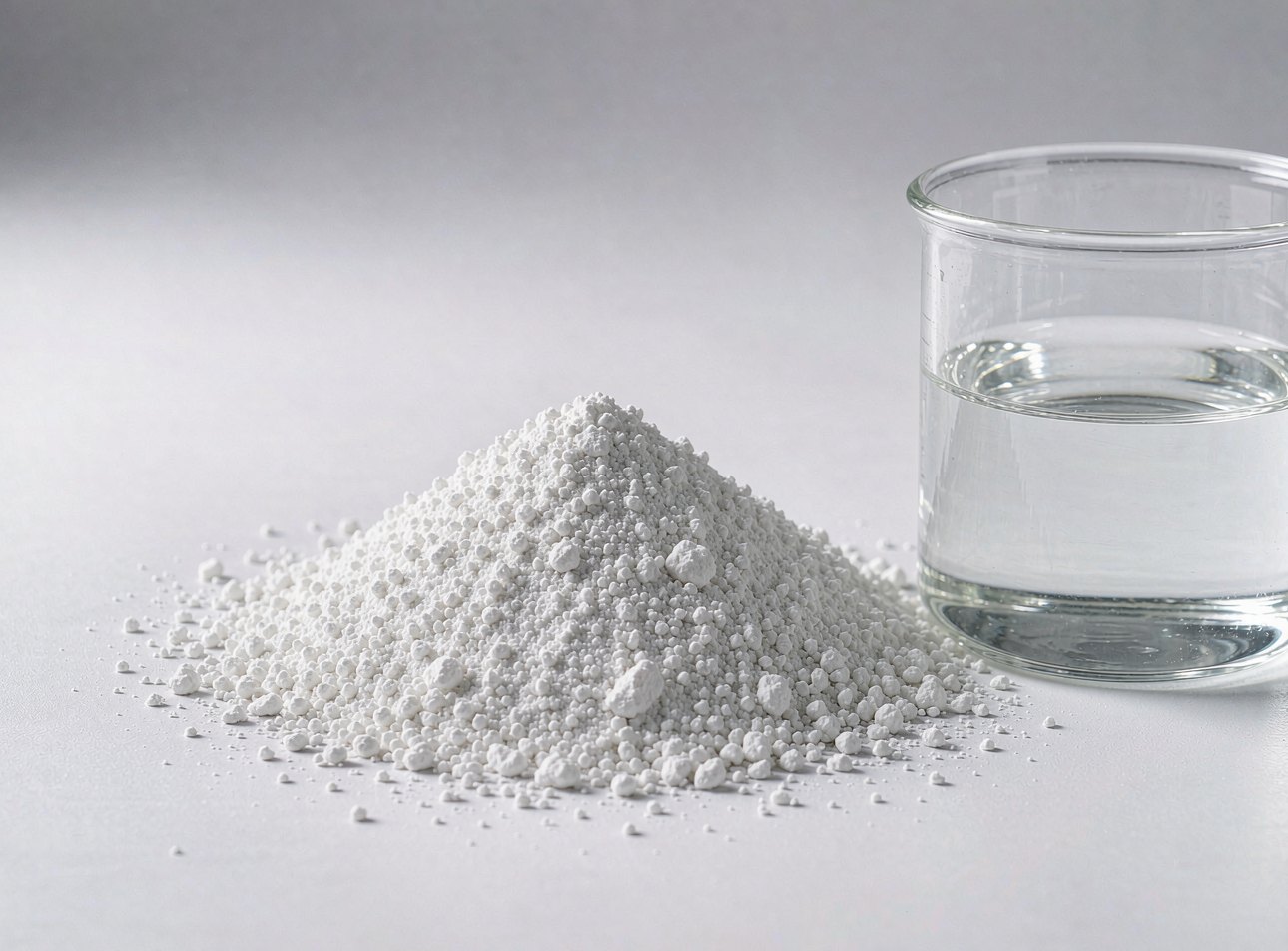
This page consolidates the additive selection logic, reference loadings and competitor benchmarking for the five major PV scenarios, for quick reference
Tiangang's support for PV customers usually starts with three things: confirming the application scenario (which material layer), confirming the failure symptom (what the customer observes), confirming the validation target (which certification items must be passed). This page organizes the answers to these three questions into tables you can look up directly.
I. Quick selection by application
EVA encapsulant film takes UV-326 or UV-328 with HS-944, BW-10LD and AO-B215.
| Application | First choice | Supporting package | Form preference |
|---|---|---|---|
| PV EVA encapsulant film | UV-326 / UV-328 | HS-944, BW-10LD, AO-B215 | Powder-based; ensure compounding dispersion |
| PV POE encapsulant film | UV-234 / UV-360 | HS-944, AO-B215 | Low-ion, low-metal-ion is critical |
| PET / fluorinated backsheet | UV-326 + AO-1010 | AO-1076, MB570-20PET | Powder or masterbatch both fine; masterbatch disperses better |
| Fluorine-free backsheet face layer | UV-326 / UV-328 (elevated to critical) | HS-944, AO-B215 | Additives carry the primary weather-resistance duty |
| PV cable sheath | FR-810A | AO-1010 | Flame retardancy + weather resistance in one; fewer compounding steps |
| Junction box / connectors | FR-810A or a dedicated flame-retardant masterbatch | AO-1010 + AO-1076 | Thin-wall parts pass at low loading |
| Module sealant | UV-531 / UV-P | HS-508 (liquid HALS) | Liquid, disperses better in low-viscosity systems |
| Frame and mounting coatings | UV-531 + UV-770 | AO-B225 | Liquid or powder both fine; depends on the application process |
II. Loading quick reference
Benzotriazole and triazine UVAs both run 0.3-1.5 phr; benzophenones run 0.3-1.0 phr.
| Additive type | Representative grades | Reference loading (phr) | Overdose risk |
|---|---|---|---|
| Benzotriazole UVA | UV-326 / UV-328 | 0.3 – 1.5 | Overdose may cause yellowing or blooming |
| Triazine UVA | UV-234 / UV-360 | 0.3 – 1.5 | Good compatibility, high tolerance |
| Benzophenone UVA | UV-531 / UV-P | 0.3 – 1.0 | May introduce slight color deviation |
| High-molecular-weight HALS | HS-944 / BW-10LD | 0.2 – 0.8 | More alkaline; watch for gelation |
| Low-molecular-weight HALS | HS-770 / HS-508 | 0.2 – 0.8 | Higher migration and blooming risk |
| Primary antioxidant | AO-1010 / AO-1076 | 0.1 – 0.5 | Overdose affects transparency |
| Secondary antioxidant | AO-168 | 0.1 – 0.5 | Overdose may bloom |
| Blended antioxidant | AO-B215 / AO-B225 | 0.3 – 1.0 | Calculated on 1010+168 |
| Polymeric halogen-free flame retardant | FR-810A | 0.2 – 1.2 | Affects transparency and processing flow |
III. Choosing the form: powder, liquid or masterbatch
AO-1076, UV-531, UV-P and HS-508 are all liquids.
Powder (FS)
The most cost-effective default. Suited to compounding processes; watch dispersion uniformity in high-viscosity systems (e.g. PET, PA). Tiangang's main grades are all powders.
Liquid (LS)
Best dispersibility, can be pre-blended into the base system. Suited to low-viscosity systems (coatings, sealants) and impregnation/coating processes.
Functional masterbatch (MB)
Pre-disperses the additive into a carrier resin; the customer only adds masterbatch by ratio. The core value is eliminating dispersion variation - especially important for PV customers pursuing long-term batch consistency. MB570-20PET is designed specifically for PET substrates.
Blended additive package
Pre-blends multiple components into a single product; the customer does not compound in-house. HS-788 is a light-stabilization + antioxidation pre-blended system. Fewer compounding steps = fewer sources of batch variation.
IV. Competitor benchmarking
FR-810A maps to BASF Flamestab NOR 116 and XT-8 maps to Tinuvin NOR 371.
| Tiangang product | International counterpart | Chemical type | Difference |
|---|---|---|---|
| Tiangang® FR-810A | BASF Flamestab® NOR 116 | Polymeric NOR halogen-free flame retardant | Higher temperature resistance, wider processing window (≤250°C), lower migration and extraction |
| Tiangang® XT-8 | BASF Tinuvin® NOR 371 | High-molecular-weight NOR HALS | Pesticide/acid resistance; 38-month greenhouse trial with 50%+ mechanical retention |
| Tiangang® HS-944 | BASF Chimassorb® 944 | High-molecular-weight polymeric HALS | Same technology route; low migration from the high-molecular-weight structure |
| Tiangang® BW-10LD | BASF Chimassorb® 622 | Succinate-type polymeric HALS | Same structure; this grade is the LD low-dust version |
| Tiangang® HS-770 | BASF Tinuvin® 770 | Sebacate-type HALS | Same structure, low-molecular-weight oil-soluble |
| Tiangang® HS-508 | BASF Tinuvin® 292 | Liquid HALS | Liquid grades for coating and sealant systems |
V. Validation workflow and timelines
Allow 1 week for requirement clarification, 1-2 weeks for sampling and 4-12 weeks for accelerated ageing.
| Stage | Content | Typical timeline | Support Tiangang can provide |
|---|---|---|---|
| Requirement clarification | Define scenario, failure symptom, validation target and climate zone | 1 week | Technical engineer engagement; mapping formulation boundary conditions |
| Pilot sampling | Provide samples; define the recommended starting loading range | 1-2 weeks | Samples + starting formulation advice |
| Accelerated-aging validation | QUV aging, damp heat 85/85, thermal aging | 4-12 weeks | Can join on-site testing; advice on test conditions |
| Field tracking | Pilot line or actual project validation | 3-6 months | Regular follow-ups; track data and iterate the formulation |
VI. FAQ
For the same UVA, a 20 um film and a 200 um thick-wall part can differ in required dose by several times.
Q: Why do loading recommendations differ so much between manufacturers for the same additive?
A: Loading depends on the base resin, part thickness, target life class and local climate radiation intensity. Start from the range Tiangang gives and converge on the specific value through accelerated-aging validation.
Q: How to choose between high- and low-molecular-weight HALS?
A: High-molecular-weight grades (HS-944, BW-10LD) are low-volatility, low-migration and extraction-resistant, suited to long cycles and migration-sensitive uses; low-molecular-weight grades (HS-770, HS-508) disperse well and are more system-compatible, suited to coatings and dispersion-critical systems. The two can also be blended.
Q: Are there real PV-module use cases for Tiangang products?
A: Tiangang's polymeric HALS has publicly reported field data on floating PV floats (HDPE substrate): untreated floats last about 3-5 years, while the Tiangang® HS-950 solution extends this to about 10-20 years; the case won the 2023 Ringier Trade Resources Innovation Award. For more PV sub-segment cases, talk to the technical team directly.
Q: How do I get samples?
A: Please submit your requirements via the Contact us page, stating the application scenario, resin system and target validation items, and we will arrange samples and technical support.
Tiangang can provide complete additive formulation support across the five major PV scenarios - encapsulant film, module backsheet, cables and connections, frames and sealing, and functional masterbatches. Tell us your application scenario and the problems you are facing, and the technical team will propose actionable solutions.
Request samples and formulation advice →- None
- None
Certifications
- National High-Tech Enterprise
- Vice Chairman Unit, China Plastics Processing Industry Association (CPPIA)
- Vice Chairman Unit, Agricultural Plastics Branch, China Agricultural Plastics Application Technology Society
- Member, Ageing Methods Subcommittee, National Technical Committee on Plastics (SAC/TC15/CS5)
- Member, Society of the Plastics Industry (SPI), USA
Recommended Products
Products
UV Absorbers
400-094-4362
- Tiangang elected Executive Deputy Director Unit of CPPIA Agricultural Film Committee
- Tiangang wins Leading Award at Beijing TV Innovation Institute finals
- Tiangang concludes CHINAPLAS 2023 on a high note
- First industry-academia-research base in Weishanzhuang Town lands at Tiangang
- Tiangang-Tinaco BUCT scholarship award ceremony 2021-2022
Share the substrate, processing conditions and target service life to save a round of back-and-forth.
Start an inquiry 400-094-4362