
Cables & Connection Systems: Balancing Low-Smoke Zero-Halogen Flame Retardancy with 25-Year Weather Resistance
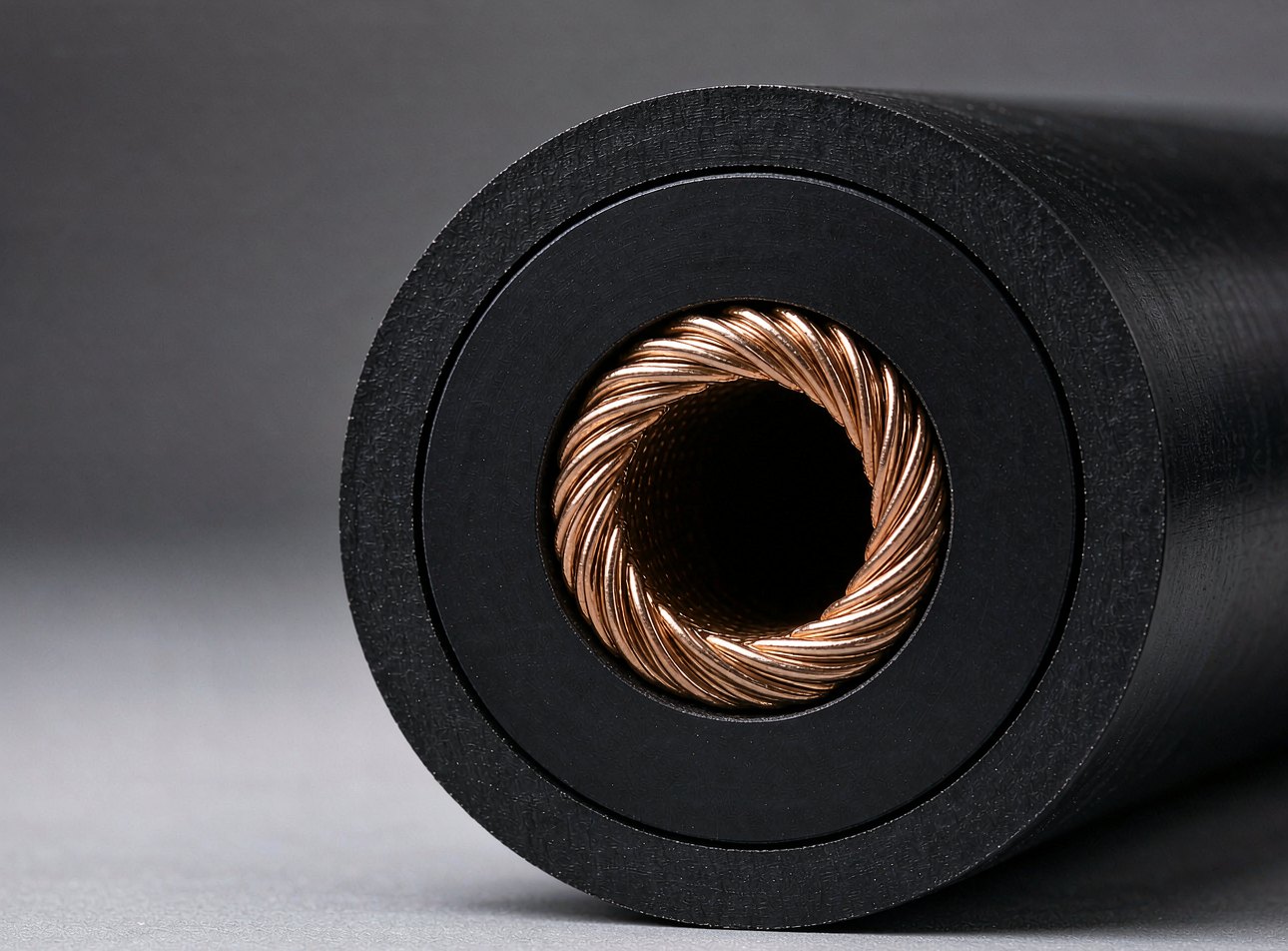
PV-dedicated cable must simultaneously meet low-smoke zero-halogen, UV resistance and flame retardancy - and these three usually constrain one another
The DC-side working voltage of PV plants has reached 1500 V or even 2000 V, and the cable's flame-retardancy rating directly defines the plant's fire-safety boundary. The cable must also offer 25 years of outdoor weather resistance and PID resistance; the mutual constraint among these three requirements is the core technical conflict in this segment.
I. The three-way conflict in PV cable
| Requirement | Standard basis | Technical difficulty |
|---|---|---|
| Flame retardancy | TUV 2 PfG 1169 / IEC 62930; UL4703 (North America) | The flame retardant must reach a UL94 rating at low loading, without introducing excess smoke and toxicity |
| Low smoke zero halogen | Plant fire-evacuation requirements; RoHS and REACH limits | Halogenated flame retardants (e.g. short-chain chlorinated paraffins) are excluded, and halogen-free systems are inherently less flame-efficient |
| Weather and aging resistance | IEC 60216, UV accelerated aging, 25 years outdoors | Outdoor UV plus long-term thermal aging - the sheath material must combine flame retardancy and weather resistance |
The traditional approach is flame retardant + light stabilizer + antioxidant all three added together, but this path has two practical problems:
- High loading cost - all three additives must be dosed sufficiently to pass individually, and multi-additive combinations markedly raise formulation cost and processing burden;
- Mutual interference risk - some flame retardants (especially halogenated systems) accelerate photo-oxidation during processing and service, weakening the light-stabilization system.
II. Tiangang's solution: FR-810A, one additive two functions
Tiangang® FR-810A is a polymeric NOR halogen-free flame retardant based on hindered-amine (HALS) chemistry.
combining flame retardancy and light stabilization in one product. Built on the polymeric NOP™ technology platform and internationally patent-licensed, it shares its chemical class with BASF Flamestab® NOR 116.
| Dimension | Tiangang® FR-810A | Flamestab® NOR 116 (benchmark) |
|---|---|---|
| Chemical structure | Polymeric NOR-HALS | Single-molecule NOR-HALS (molecular weight about 2261) |
| Temperature resistance | Higher (polymeric structure) | Medium |
| Recommended processing temperature | ≤ 250 ℃ | Relatively low |
| Migration / extraction | Low (polymeric structure) | Relatively high |
| Recommended loading | 0.2 – 1.2% | 0.5 – 1.5% |
| Compliance | REACH / TSCA / FDA | Conventional |
III. Recommended formulations by component
DC cable sheaths run FR-810A with AO-1010 to reach V-0 or V-1 in a low-smoke zero-halogen compound.
| Component | Typical material | Recommended product | Focus points |
|---|---|---|---|
| DC cable sheath | PE / XLPE / flame-retardant PVC | FR-810A + AO-1010 | Flame retardancy V-0/V-1 together with weather resistance; FR-810A also provides long-term thermal stability |
| AC cable | PE / PVC | FR-810A | Low-smoke zero-halogen needs first; loading can go as low as 0.2% |
| Junction-box housing | PA / PC / PBT-GF | FR-810A or a dedicated flame-retardant masterbatch | Flame-retardancy rating and long-term outdoor weather resistance; mind PBT's processing-temperature limit |
| Connector insulating parts | PA / PBT / PET | AO-1010 + AO-1076 + FR-810A | Thermal aging and flame retardancy together; long-term outdoor exposure |
| Cable ties / fasteners | PA66 | FR-810A | Rating met at low loading, minimizing impact on mechanical properties |
IV. FAQ
Q: Can FR-810A reach a V-0 rating?
A: FR-810A's recommended loading range is 0.2-1.2%. On thin sections such as PP fiber, nonwoven fabric and narrow tape, a V1 rating is reached at low loading; V0 usually requires higher loading or a filler system. The achievable rating depends on wall thickness, resin grade and formulation design - confirm against measured UL94 results.
Q: Will a flame retardant affect the cable's insulation or electrical performance?
A: FR-810A is polymeric, with low volatility and low migration; at recommended loadings it shows excellent resin compatibility and does not affect mechanical properties or part appearance. For insulating-layer formulations, still confirm volume resistivity and dielectric-strength items per UL and IEC by measurement.
Q: Does halogen-free flame retardancy sacrifice weather resistance?
A: Conventional inorganic flame retardants (e.g. ATH, MDH) do sacrifice mechanical properties and weather resistance. FR-810A uses a polymeric NOR structure and is itself a HALS system: it enhances weather resistance while providing flame retardancy, so there is no flame-retardancy-versus-weather-resistance trade-off.
If you are designing flame-retardant formulations for cables, junction boxes or connectors - especially to reduce the multi-additive burden of flame retardant + light stabilizer + antioxidant - send us the resin grade, part wall thickness and target flame-retardancy rating, and the Tiangang technical team will advise on the formulation.
Contact the Tiangang technical team →- None
- None
Certifications
- National High-Tech Enterprise
- Vice Chairman Unit, China Plastics Processing Industry Association (CPPIA)
- Vice Chairman Unit, Agricultural Plastics Branch, China Agricultural Plastics Application Technology Society
- Member, Ageing Methods Subcommittee, National Technical Committee on Plastics (SAC/TC15/CS5)
- Member, Society of the Plastics Industry (SPI), USA
Recommended Products
Products
UV Absorbers
400-094-4362
- Tiangang elected Executive Deputy Director Unit of CPPIA Agricultural Film Committee
- Tiangang wins Leading Award at Beijing TV Innovation Institute finals
- Tiangang concludes CHINAPLAS 2023 on a high note
- First industry-academia-research base in Weishanzhuang Town lands at Tiangang
- Tiangang-Tinaco BUCT scholarship award ceremony 2021-2022
Share the substrate, processing conditions and target service life to save a round of back-and-forth.
Start an inquiry 400-094-4362