
Artificial Turf Stars at the World Cup: The Chinese Materials Technology Behind It
Qatar spent a staggering $220 billion on the most expensive World Cup in history. How extravagant was it? To build a pitch worthy of the World Cup, Qatar brought in a world-famous turf company to specially develop grass varieties suited to planting in that season, and spent billions of dollars on maintenance.
Could there really be a grass so versatile that it stays lush and lovely even after being trampled over and over?
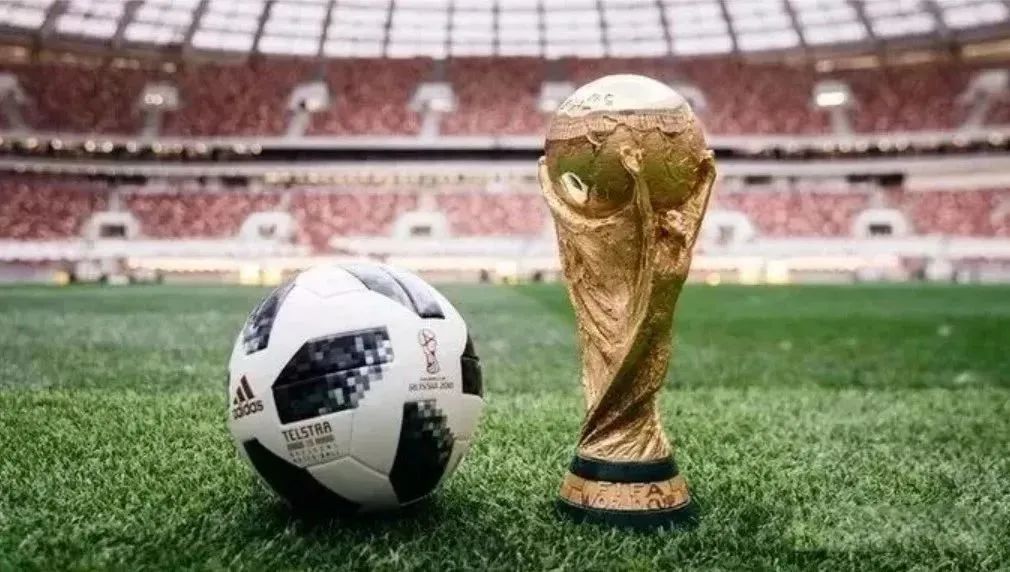
Of course not!Because of the high intensity of football, turf must be resilient, resistant to trampling and easy to maintain. According to reports, no grass has yet been found that can meet the needs of every pitch.Specifically, football turf types differ from region to region, and the same stadium plants different grass species in different seasons.
For this reason, this World Cup spared no expense in selecting a pitch that interweaves drought-resistant warm-season grass suited to desert environments with cold-tolerant ryegrass..To secure the roots and improve the durability of the pitch, the turf for this World Cup had artificial grass fibers inserted into 95% natural grass.As the grass grows, the roots of the natural grass intertwine with the artificial fibers; the natural grass anchored by these artificial fibers ultimately forms a flat, firm and stable sports field.
Hearing this, many people cannot help but wonder:What are artificial grass fibers ("artificial grass" for short)? Why do they have such powerful functions?This all comes down to the highly efficient light stabilizers that we "plastics people" are proud of...
Small artificial grass fibers, packed with technology
Artificial grass originated in the United States in 1966, initially to solve the problem of natural grass being unable to grow under canopies. It is now mainly divided into two categories: sports turf and leisure turf. The one we will focus on today issports turf, which usually features high abrasion resistance, resilience, aging resistance and durability. It can meet the demands of professional sports and is therefore used in football fields, gateball fields, badminton courts and other sports venues.
As it is used mainly outdoors, the anti-aging problem of artificial grass has always been a top priority. Did you know?The key additive determining the anti-aging performance of grass — hindered amine light stabilizers (HALS) — has been used in artificial grass for more than twenty years.It can shield or absorb the energy of ultraviolet rays, preventing or delaying the photo-aging of polymer materials and greatly extending their service life. It currently plays an indispensable role in long-term outdoor applications such as agricultural plastic films, daylighting materials, building materials, light-resistant coatings, medical plastics and synthetic fibers.
It is understood that 60% of the world's artificial grass is produced in China, and its main components are polyethylene (PE), nylon (PA), polypropylene (PP) and others. Compared with natural grass, these artificial grasses offer advantages such as long service life, lower maintenance cost, the ability to maintain good visual effects over the long term, and water conservation.
Traditional HALS products have made outstanding contributions to the aging resistance of artificial grass. However,with changes in the use environment and usage habits, traditional HALS can no longer fully meet the new requirements of artificial grass.First, global warming is driving ever-higher demands for the thermo-oxidative aging resistance of artificial grass. Second, traditional HALS tends to be strongly alkaline, but during use the grass often comes into contact with acidic substances, such as those contained in infill rubber granules (vulcanizing agents, stearic acid, etc.), acidic bleaching cleaners (such as NaClO), acid rain and brominated flame retardants. In these cases, traditional HALS is consumed by acidic substances, causing its light-stabilizing performance to decline and thereby shortening the service life of artificial grass.
High-efficiency low-alkalinity light stabilizers, unafraid of acidic challenges
To break this bottleneck, global light stabilizer companies have alreadycontinued to invest in R&D of acid-resistant hindered amine light stabilizers.
Beijing Tiangang, as one of China's earliest enterprises engaged in the production and R&D of light stabilizers, has products favored by well-known turf companies at home and abroad. This time itsindependently developed high-efficiency low-alkalinity light stabilizer Tiangang® HS-625 accompanied artificial grass into the World Cup arena.
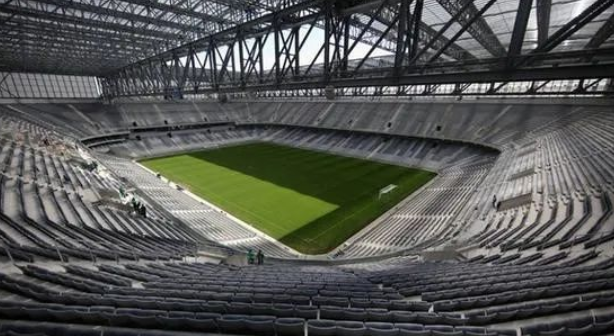
Image: one of the stadiums of this World Cup (picture sourced from the internet)
Why did HS-625 become the chosen one for the World Cup?
According to reports, HS-625 is an important upgraded product among acid-resistant high-molecular-weight hindered amine light stabilizers. It features a narrower molecular weight distribution and higher effective nitrogen content, significantly improving the long-term thermo-oxidative stability of products. Its weak alkalinity lowers the reactivity with acidic substances, improving the acid resistance of artificial grass, and it can withstand frequent rinsing with detergents and disinfectants. To sum it up in one sentence: HS-625 offers lower alkalinity and more excellent long-term weather resistance, effectively solving the weather-resistance problem of turf in acidic environments and keeping football fields green.
Certifications
- National High-Tech Enterprise
- Vice Chairman Unit, China Plastics Processing Industry Association (CPPIA)
- Vice Chairman Unit, Agricultural Plastics Branch, China Agricultural Plastics Application Technology Society
- Member, Ageing Methods Subcommittee, National Technical Committee on Plastics (SAC/TC15/CS5)
- Member, Society of the Plastics Industry (SPI), USA
Recommended Products
Products
UV Absorbers
400-094-4362
- Tiangang elected Executive Deputy Director Unit of CPPIA Agricultural Film Committee
- Tiangang wins Leading Award at Beijing TV Innovation Institute finals
- Tiangang concludes CHINAPLAS 2023 on a high note
- First industry-academia-research base in Weishanzhuang Town lands at Tiangang
- Tiangang-Tinaco BUCT scholarship award ceremony 2021-2022
Share the substrate, processing conditions and target service life to save a round of back-and-forth.
Start an inquiry 400-094-4362