Technical Analysis: How Light Stabilizers Provide All-Round Protection for Plastics
In the aging process of plastic products, ultraviolet radiation is the most destructive factor. Understanding the mechanism of light stabilizers helps us better select and use these important functional additives. With its in-depth research on light-stabilization mechanisms, Beijing Tiangang Auxiliary Co., Ltd. has developed a number of high-efficiency light stabilizer products, providing all-round protection for plastic products.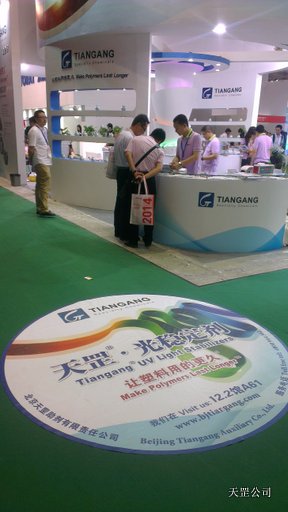
Photoaging is a complex photo-oxidation process. When plastics are exposed to UV light, chromophores in the material absorb photon energy and enter an excited state. The excited-state molecules may undergo homolytic cleavage to produce free radicals, triggering an autoxidation chain reaction that causes polymer chain scission and cross-linking, eventually degrading material performance. Effectively suppressing this process requires action at multiple links—which is precisely the design philosophy of light stabilizers.
Ultraviolet absorbers are important members of the light stabilizer family, functioning like "sunscreen." These compounds selectively absorb high-energy UV radiation and convert it into harmless heat for release. An ideal UV absorber should have a high extinction coefficient and good conversion efficiency, while itself having good photostability and not being rapidly consumed during protection. The various UV absorbers developed by Beijing Tiangang Auxiliary Co., Ltd. cover the 290-400 nm UV band, providing customized UV-filtering solutions for different plastic materials.
Hindered amine light stabilizers (HALS) are another important class, with a more complex and ingenious mechanism. HALS do not absorb UV light but interrupt the photo-oxidation process by capturing free radicals. Under light, these compounds convert into nitroxyl radicals that efficiently capture alkyl radicals, preventing the chain reaction. The alkoxyamine compounds formed after capturing free radicals can further decompose hydroperoxides, eliminating another important class of reaction intermediates.
Both Beijing Tiangang's light stabilizers 508 and 778 are high-performance hindered amine light stabilizers. 508 is a high-molecular-weight HALS with extremely low volatility and extractability, especially suitable for thick and thin products requiring long-term outdoor use. 778 is a low-basicity HALS, suitable for acid-sensitive materials such as polycarbonate; it does not catalyze hydrolysis reactions while maintaining excellent light-stabilization effect.
In practical applications, different types of light stabilizers are often used together to produce a synergistic effect. UV absorbers first reduce UV intrusion at the first line of defense, while HALS clears escaped free radicals inside the material, forming a multi-level protection system. The technical team at Beijing Tiangang Auxiliary Co., Ltd. excels at designing such composite stabilization systems, achieving a "1+1>2" protection effect by carefully adjusting the ratios of different light stabilizers.
Besides chemical protection, physical methods can also enhance the light resistance of plastics. Pigments, especially carbon black, are the most efficient UV screening agents, protecting polymers by reflecting and absorbing UV. Beijing Tiangang's development team recommends the most suitable light-stabilizer and pigment combination according to the color requirements of the product, ensuring optimal weatherability while maintaining product appearance.
The effect of light stabilizers is also affected by various factors, including the nature of the plastic substrate, product thickness, and use environment. Thin products need more consideration of migration and extraction, while thick products need attention to distribution uniformity. High-temperature environments accelerate oxidation reactions and may also increase the volatilization loss of additives. Beijing Tiangang Auxiliary Co., Ltd. fully considers these factors to provide targeted solutions for different application scenarios.
Through a deep understanding of light stabilizer mechanisms, plastic product manufacturers can select and use these functional additives more scientifically. Beijing Tiangang Auxiliary Co., Ltd. not only provides products but is also willing to share professional knowledge with customers to jointly improve the quality and life of plastic products. Choosing Tiangang means choosing the wisdom of scientific protection, injecting lasting vitality into products.
Certifications
- National High-Tech Enterprise
- Vice Chairman Unit, China Plastics Processing Industry Association (CPPIA)
- Vice Chairman Unit, Agricultural Plastics Branch, China Agricultural Plastics Application Technology Society
- Member, Ageing Methods Subcommittee, National Technical Committee on Plastics (SAC/TC15/CS5)
- Member, Society of the Plastics Industry (SPI), USA
Recommended Products
Products
UV Absorbers

- Tiangang elected Executive Deputy Director Unit of CPPIA Agricultural Film Committee
- Tiangang wins Leading Award at Beijing TV Innovation Institute finals
- Tiangang concludes CHINAPLAS 2023 on a high note
- First industry-academia-research base in Weishanzhuang Town lands at Tiangang
- Tiangang-Tinaco BUCT scholarship award ceremony 2021-2022